
Below are recordings of prominent oboe solos in the orchestral repertoire performed by Marcel Tabuteau. Excerpts of 20 seconds or more (rather than shorter episodes) qualify for inclusion and are being added periodically.
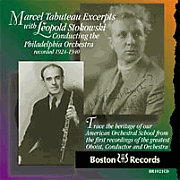
Marcel Tabuteau Excerpts
Original Release Format: CD (from 78 RPMs)
Label: Boston Records
Catalog #: 1021
Release Date: 01/01/2001
Conductor: Leopold Stokowski
Orchestra: Philadelphia Orchestra
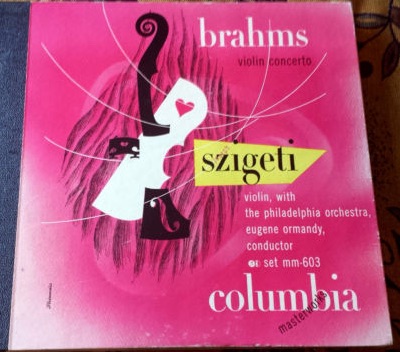
Johannes Brahms: Concerto for Violin in D Major, Op. 77 (2nd movement)*
Original Release Format: 78 RPM set
Label: Columbia Masterworks
Catalog #: MM-603
Year Recorded: 1945
Soloist: Joseph Szigeti
Conductor: Eugene Ormandy
Orchestra: Philadelphia Orchestra
*Perhaps the most celebrated oboe solo in the symphonic repertoire. One wonders what Tabuteau’s retort would have been to Pablo de Sarasate’s reported remark: “I have no wish to stand there, violin in hand, listening to the oboe playing the only tune in the entire work.”(!) Sarasate refused to perform it.
Samuel Barber: Violin Concerto, Op. 14 (2nd Movement)*
Original Release Format: CD of Radio Broadcast
Label: West Hill Radio Archives
Catalog #: 6039
Year Recorded: 1941
Soloist: Albert Spalding
Conductor: Eugene Ormandy
Orchestra: Philadelphia Orchestra
*In the opinion of Barbara Heyman, Samuel Barber’s renowned biographer, and Marc Mostovoy, a Tabuteau student and cognoscente on the genesis of the Barber Violin Concerto, the second movement opening oboe solo was most likely written with the Brahms Violin Concerto and Marcel Tabuteau in mind. Barber greatly admired both the composer and oboist; he attended many of Tabuteau’s wind classes at Curtis. The premier was to be given by the Philadelphia Orchestra where Tabuteau, as principal oboist, often performed the Brahms solo, and where Barber most probably heard it. The confluence of all these factors points heavily towards that conclusion.
Johann Sebastian Bach: Fugue in G Minor, BWV 578 (Stokowski Transcription)
Original Release Format: 78 RPM
Label: Victor
Catalog #: 7437
Year Recorded: 1931
Conductor: Leopold Stokowski
Orchestra: Philadelphia Orchestra
Johann Sebastian Bach: Toccata, Adagio and Fugue in C major (Arr. Weiner)
Tape of Radio Broadcast (CBS)
Year Recorded: 1948
Conductor: Alexander Hillsberg
Orchestra: Philadelphia Orchestra
Ludwig van Beethoven: Symphony No. 3 “Eroica” in E♭ Major, Op. 55 (2nd movement)
Tape of Radio Broadcast (CBS)
Year Recorded: 1944
Conductor: Bruno Walter
Orchestra: Philadelphia Orchestra
Ludwig van Beethoven: Symphony No. 7 in A Major, Op. 92 (1st movement)
Original Release Format: 78 RPM set
Label: Victor
Catalog #: M-17
Year Recorded: 1927
Conductor: Leopold Stokowski
Orchestra: Philadelphia Orchestra
Ludwig van Beethoven: Symphony No. 7 in A Major, Op. 92 (1st movement)
Original Release Format: 78 RPM set
Label: Columbia
Catalog #: M/MM-557
Year Recorded: 1944
Conductor: Eugene Ormandy
Orchestra: Philadelphia Orchestra
Georges Bizet: Carmen Suite (from act 1 scene 5)
Original Release Format: 78 RPM
Label: Victor
Catalog #: 1356
Year Recorded: 1927
Conductor: Leopold Stokowski
Orchestra: Philadelphia Orchestra
Johannes Brahms: Symphony No. 1 in C Minor, Op. 68 (1st movement)
Original Release Format: 78 RPM set
Label: Victor
Catalog #: M-15
Year Recorded: 1927
Conductor: Leopold Stokowski
Orchestra: Philadelphia Orchestra
Johannes Brahms: Symphony No. 1 in C Minor, Op. 68 (1st movement)
Original Release Format: 78 RPM set
Label: Victor
Catalog #: M-301
Year Recorded: 1935
Conductor: Leopold Stokowski
Orchestra: Philadelphia Orchestra
Johannes Brahms: Symphony No. 1 in C Minor, Op. 68 (1st movement)
Original Release Format: 45 RPM set
Label: Columbia
Catalog #: A-1089
Year Recorded: 1950
Conductor: Eugene Ormandy
Orchestra: Philadelphia Orchestra
Johannes Brahms: Symphony No. 1 in C Minor, Op. 68 (2nd movement)
Original Release Format: 78 RPM set
Label: Victor
Catalog #: M-15
Year Recorded: 1927
Conductor: Leopold Stokowski
Orchestra: Philadelphia Orchestra
Johannes Brahms: Symphony No. 1 in C Minor, Op. 68 (2nd movement)
Original Release Format: 78 RPM set
Label: Victor
Catalog #: M-301
Year Recorded: 1935
Conductor: Leopold Stokowski
Orchestra: Philadelphia Orchestra
Johannes Brahms: Symphony No. 1 in C Minor, Op. 68 (2nd movement)
Original Release Format: 45 RPM set
Label: Columbia
Catalog #: A-1089
Year Recorded: 1950
Conductor: Eugene Ormandy
Orchestra: Philadelphia Orchestra
Pablo Casals: Sardana “Sant Marti del Canigo”
Original Release Format: LP
Label: Columbia
Catalog #: ML 4926
Year Recorded: 1950
Conductor: Pablo Casals
Orchestra: Prades Festival Orchestra
Claude Debussy: Images pour orchestre; No. 2 Iberia
Original Release Format: LP (not issued on 78 RPM)
Label: RCA
Catalog #: CRM5-1900
Year Recorded: 1941
Conductor: Arturo Toscanini
Orchestra: Philadelphia Orchestra
Claude Debussy: Images pour orchestre; No. 2 Iberia
Original Release Format: LP
Label: Columbia
Catalog #: ML-4434
Year Recorded: 1951
Conductor: Eugene Ormandy
Orchestra: Philadelphia Orchestra
Claude Debussy: Prélude à l’après-midi d’un faune
Original Release Format: 78 RPM
Label: Victor
Catalog #: 6775 B
Year Recorded: 1924
Conductor: Leopold Stokowski
Orchestra: Philadelphia Orchestra
Claude Debussy: Prélude à l’après-midi d’un faune
Original Release Format: 78 RPM
Label: Victor
Catalog #: 6696
Year Recorded: 1927
Conductor: Leopold Stokowski
Orchestra: Philadelphia Orchestra
Claude Debussy: Prélude à l’après-midi d’un faune
Original Release Format: CD (not released on 78 RPM)
Label: Biddulph
Catalog #: WHL-013
Year Recorded: 1940 (March)
Conductor: Leopold Stokowski
Orchestra: Philadelphia Orchestra [Coming]
Claude Debussy: Prélude à l’après-midi d’un faune
Original Release Format: 78 RPM
Label: Victor
Catalog #: 17700
Year Recorded: 1940 (December)
Conductor: Leopold Stokowski
Orchestra: Philadelphia Orchestra
Henry Eichheim: Japanese Nocturne
Original Release Format: 78 RPM
Label: Victor
Catalog #: 7260
Year Recorded: 1929
Conductor: Leopold Stokowski
Orchestra: Philadelphia Orchestra
George Frederick Handel: Water Music Suite
Original Release Format: 78 RPM
Label: Victor
Catalog #: 8551
Year Recorded: 1934
Conductor: Leopold Stokowski
Orchestra: Philadelphia Orchestra
Victor Herbert: Irish Rhapsody
Original Release Format: 45 RPM set
Label: Columbia
Catalog #: A-1030
Year Recorded: 1952
Conductor: Eugene Ormandy
Orchestra: Philadelphia Orchestra ‘Pops’
Mikhail Ippolitov-Ivanov: Caucasian Sketches, Op. 10 (In the Village)
Original Release Format: 78 RPM
Label: Victor
Catalog #: 6514
Year Recorded: 1925
Conductor: Leopold Stokowski
Orchestra: Philadelphia Orchestra
Mikhail Ippolitov-Ivanov: Caucasian Sketches, Op. 10 (Procession of the Sardar)
Original Release Format: 78 RPM
Label: Victor
Catalog #: 66106
Year Recorded: 1922
Conductor: Leopold Stokowski
Orchestra: Philadelphia Orchestra
Mikhail Ippolitov-Ivanov: Caucasian Sketches, Op. 10 (Procession of the Sardar)
Original Release Format: 78 RPM
Label: Victor
Catalog #: 1335
Year Recorded: 1927
Conductor: Leopold Stokowski
Orchestra: Philadelphia Orchestra
Franz Liszt: Les Preludes
Original Release Format: 78 RPM set
Label: Victor
Catalog #: M/DM-453
Year Recorded: 1937
Conductor: Eugene Ormandy
Orchestra: Philadelphia Orchestra
Franz Liszt: Les Preludes
Original Release Format: 78 RPM set
Label: Columbia
Catalog #: MX-321
Year Recorded: 1946
Conductor: Eugene Ormandy
Orchestra: Philadelphia Orchestra
Harl McDonald: Saga of the Mississippi
Tape of Radio Broadcast (CBS)
Year Recorded: 1944
Conductor: Eugene Ormandy
Orchestra: Philadelphia Orchestra
Harl McDonald: Concerto for Violin (2nd movement)
Tape of Radio Broadcast (CBS)
Year Recorded: 1945
Soloist: Alexander Hilsberg
Conductor: Eugene Ormandy
Orchestra: Philadelphia Orchestra
Harl McDonald: Concerto for Violin (2nd movement)
Tape of Radio Broadcast (CBS)
Year Recorded: 1947
Soloist: Alexander Hilsberg
Conductor: Eugene Ormandy
Orchestra: Philadelphia Orchestra
Modest Mussorgsky: Khovanshchina–Prelude to Act IV (revised by Rimsky-Korsakov)
Original Release Format: 78 RPM
Label: Victor
Catalog #: 74803
Year Recorded: 1922
Conductor: Leopold Stokowski
Orchestra: Philadelphia Orchestra
Modest Mussorgsky: Khovanshchina–Prelude to Act IV (arr. Stokowski)
Label: Victor
Catalog #: 6775 B
Year Recorded: 1927
Conductor: Leopold Stokowski
Orchestra: Philadelphia Orchestra
Modest Mussorgsky: Night on Bald Mountain (arr. Stokowski)
Original Release Format: 78 RPM set
Label: Victor
Catalog #: 17900
Year Recorded: 1940
Conductor: Leopold Stokowski
Orchestra: Philadelphia Orchestra
Sergei Rachmaninov: Symphony No. 1 in D minor, Op. 13 (1st movement)
Tape of Radio Broadcast
Year Recorded: 1948
Conductor: Eugene Ormandy
Orchestra: Philadelphia Orchestra
Nikolai Rimsky-Korsakov: Schéhérazade, Op. 35 (2nd movement)
Original Release Format: 78 RPM set
Label: Victor
Catalog #: M-23
Year Recorded: 1927
Conductor: Leopold Stokowski
Orchestra: Philadelphia Orchestra
Nikolai Rimsky-Korsakov: Schéhérazade, Op. 35 (2nd movement)
Original Release Format: 78 RPM set
Label: Victor
Catalog #: M-269
Year Recorded: 1934
Conductor: Leopold Stokowski
Orchestra: Philadelphia Orchestra
Nikolai Rimsky-Korsakov: Schéhérazade, Op. 35 (2nd movement)
Original Release Format: 78 RPM set
Label: Columbia
Catalog #: MM-772
Year Recorded: 1947
Conductor: Eugene Ormandy
Orchestra: Philadelphia Orchestra
Nikolai Rimsky-Korsakov: Schéhérazade, Op. 35 (2nd movement)
Original Release Format: 45 RPM set
Label: Columbia
Catalog #: A-1103
Year Recorded: 1953
Conductor: Eugene Ormandy
Orchestra: Philadelphia Orchestra
Camille Saint Saëns: Samson et Dalila, Op 47 (Bacchanale)
Original Release Format: 78 RPM
Label: Victor
Catalog #: 6241
Year Recorded: 1920
Conductor: Leopold Stokowski
Orchestra: Philadelphia Orchestra
Camille Saint Saëns: Samson et Dalila, Op 47 (Bacchanale)
Original Release Format: 78 RPM
Label: Victor
Catalog #: 6823
Year Recorded: 1927
Conductor: Leopold Stokowski
Orchestra: Philadelphia Orchestra
Erik Satie: Gymnopedies No. 1
Original Release Format: 78 RPM
Label: Victor
Catalog #: 1965
Year Recorded: 1937
Conductor: Leopold Stokowski
Orchestra: Philadelphia Orchestra
Erik Satie: Gymnopedies No. 3
Original Release Format: 78 RPM
Label: Victor
Catalog #: 1965
Year Recorded: 1937
Conductor: Leopold Stokowski
Orchestra: Philadelphia Orchestra
Franz Schubert: Symphony No. 8 in B Minor, D 759 “Unfinished” (2nd movement)
Original Release Format: 78 RPM set
Label: Victor
Catalog #: 6459/61
Year Recorded: 1924
Conductor: Leopold Stokowski
Orchestra: Philadelphia Orchestra
Franz Schubert: Symphony No. 8 in B Minor, D 759 “Unfinished” (2nd movement)
Original Release Format: 78 RPM set
Label: Victor
Catalog #: 6663/65
Year Recorded: 1927
Conductor: Leopold Stokowski
Orchestra: Philadelphia Orchestra
Franz Schubert: Symphony No. 8 in B Minor, D 759 “Unfinished” (2nd movement)
Original Release Format: 78 RPM set
Label: World’s Greatest Music
Catalog #: SR-1/3
Year Recorded: 1938
Conductor: (Eugene Ormandy)
Orchestra: (Philadelphia Orchestra)
Franz Schubert: Symphony No. 8 in B Minor, D 759 “Unfinished” (2nd movement)
Original Release Format: 78 RPM set
Label: Columbia
Catalog #: 12639/41-D
Year Recorded: 1947
Conductor: Bruno Walter
Orchestra: Philadelphia Orchestra
Franz Schubert: Symphony No. 9 in C Major, D 944 “Great” (2nd movement)
Original Release Format: LP (not issued on 78 RPM)
Label: Victor
Catalog #: LD-2663
Year Recorded: 1941
Conductor: Arturo Toscanini
Orchestra: Philadelphia Orchestra
Franz Schubert: Symphony No. 9 in C Major, D 944 “Great” (2nd movement)
Tape of Radio Broadcast (CBS)
Year Recorded: 1948
Conductor: George Szell
Orchestra: Philadelphia Orchestra
Robert Schumann: Piano Concerto in A Minor, Op. 54 (1st movement)
Original Release Format: 78 RPM set
Label: Columbia
Catalog #: M/MM-734
Year Recorded: 1946
Soloist: Rudolf Serkin
Conductor: Eugene Ormandy
Orchestra: Philadelphia Orchestra
Robert Schumann: Symphony No. 2 in C Major, Op. 61 (3rd movement)
Original Release Format: 78 RPM set
Label: Victor
Catalog #: M-448
Year Recorded: 1936
Conductor: Eugene Ormandy
Orchestra: Philadelphia Orchestra
Robert Schumann: Symphony No. 2 in C Major, Op. 61 (3rd movement)
Tape of Radio Broadcast (CBS)
Year Recorded: 1948
Conductor: Alexander Hillsberg
Orchestra: Philadelphia Orchestra
Dmitri Shostakovich: Symphony No. 1 in F Minor, Op. 10 (3rd movement)
Original Release Format: 78 RPM set
Label: Victor
Catalog #: M-192
Year Recorded: 1933
Conductor: Leopold Stokowski
Orchestra: Philadelphia Orchestra
Dmitri Shostakovich: Symphony No. 5 in D Minor, Op. 47 (3rd Movement)
Original Release Format: 78 RPM set
Label: Victor
Catalog #: 15737/42
Year Recorded: 1939
Conductor: Leopold Stokowski
Orchestra: Philadelphia Orchestra
Dmitri Shostakovich: Symphony No. 5 in D Minor, Op. 47 (3rd Movement)
Tape of Radio Broadcast (CBS)
Year Recorded: 1947
Conductor: Eugene Ormandy
Orchestra: Philadelphia Orchestra
Johann Strauss der Jüngere: Die Fledermaus Overture
Original Release Format: LP
Label: Columbia
Catalog #: M/MX-311
Year Recorded: 1947
Conductor: Eugene Ormandy
Orchestra: Philadelphia Orchestra
Johann Strauss der Jüngere: Die Fledermaus Overture
Original Release Format: LP
Label: Columbia
Catalog #: ML-4686
Year Recorded: 1952
Conductor: Eugene Ormandy
Orchestra: Philadelphia Orchestra
Johann Strauss der Jüngere: Gypsy Baron Overture
Original Release Format: 78 RPM
Label: Columbia
Catalog #: M/MX-311
Year Recorded: 1947
Conductor: Eugene Ormandy
Orchestra: Philadelphia Orchestra
Richard Strauss: Der Rosenkavalier Suite
Original Release Format: 78 RPM set
Label: Columbia
Catalog #: MM-742
Year Recorded: 1947
Conductor: Eugene Ormandy
Orchestra: Philadelphia Orchestra
Richard Strauss: Der Rosenkavalier Waltzes
Tape of Radio Broadcast (CBS)
Year Recorded: 1944
Conductor: Eugene Ormandy
Orchestra: Philadelphia Orchestra
Richard Strauss: Don Quixote, Op. 35 (Introduction)
Original Release Format: 78 RPM set
Label: Victor
Catalog #: M-720
Year Recorded: 1940
Conductor: Eugene Ormandy
Orchestra: Philadelphia Orchestra
Richard Strauss: Salome, Op. 54 (Dance of the Seven Veils)
Release Format: 78 RPM set
Label: Victor
Catalog #: 74729/30
Year Recorded: 1921
Conductor: Leopold Stokowski
Orchestra: Philadelphia Orchestra
Richard Strauss: Salome, Op. 54 (Dance of the Seven Veils)
Original Release Format: 78 RPM set
Label: Victor
Catalog #: 7259/60
Year Recorded: 1929
Conductor: Leopold Stokowski
Orchestra: Philadelphia Orchestra
Richard Strauss: Salome, Op. 54 (Dance of the Seven Veils)
Original Release Format: CD (not issued on 78 RPM)
Label: Cala CD
Catalog #: 0502
Year Recorded: 1937
Conductor: Leopold Stokowski
Orchestra: Philadelphia Orchestra
Richard Strauss: Salome, Op. 54 (Dance of the Seven Veils)
Original Release Format: 78 RPM
Label: Columbia
Catalog #: 13162-D
Year Recorded: 1947
Conductor: Eugene Ormandy
Orchestra: Philadelphia Orchestra
Richard Strauss: Tod und Verklärung, Op. 24 “Death and Transfiguration” (1st Movement)
Original Release Format: 78 RPM set
Label: Victor
Catalog #: M/AM/DM-217
Year Recorded: 1934
Conductor: Leopold Stokowski
Orchestra: Philadelphia Orchestra
Richard Strauss: Tod und Verklärung, Op. 24 “Death and Transfiguration” (1st Movement)
Original Release Format: LP (not issued on 78 RPM)
Label: RCA
Catalog #: CRM5-1900
Year Recorded: 1942
Conductor: Arturo Toscanini
Orchestra: Philadelphia Orchestra
Richard Strauss: Tod und Verklärung, Op. 24 “Death and Transfiguration” (1st Movement)
Original Release Format: 78 RPM set
Label: Columbia
Catalog #: M/MM-613
Year Recorded: 1947
Conductor: Eugene Ormandy
Orchestra: Philadelphia Orchestra
Peter Ilich Tchaikovsky: Capriccio italien
Original Release Format: 78 RPM set
Label: Victor
Catalog #: 6949/50
Year Recorded: 1929
Conductor: Leopold Stokowski
Orchestra: Philadelphia Orchestra
Peter Ilich Tchaikovsky: Capriccio italien
Original Release Format: LP
Label: Columbia
Catalog #: ML-4856
Year Recorded: 1953
Conductor: Eugene Ormandy
Orchestra: Philadelphia Orchestra
Peter Ilich Tchaikovsky: Symphony No. 4 in F Minor, Op. 36 (2nd movement)
Original Release Format: 78 RPM set
Label: Victor
Catalog #: M-48
Year Recorded: 1928
Conductor: Leopold Stokowski
Orchestra: Philadelphia Orchestra
Peter Ilich Tchaikovsky: Symphony No. 4 in F Minor, Op. 36 (2nd movement)
Original Release Format: 78 RPM set
Label: Columbia
Catalog #: M-736
Year Recorded: 1947
Conductor: Eugene Ormandy
Orchestra: Philadelphia Orchestra
Peter Ilich Tchaikovsky: Symphony No. 4 in F Minor, Op. 36 (2nd movement)
Original Release Format: LP
Label: Columbia
Catalog #: ML-5074
Year Recorded: 1953
Conductor: Eugene Ormandy
Orchestra: Philadelphia Orchestra
Antonio Vivaldi: Concerto Grosso Op. 3, No. 11 in D Minor; RV 565 (2nd Movement) Stokowski transcription
Original Release Format: 78 RPM set
Label: Victor
Catalog #: 8550-8551
Year Recorded: 1934
Conductor: Leopold Stokowski
Orchestra: Philadelphia Orchestra
Richard Wagner: Tannhäuser; Act III–Prelude
Original Release Format: 78 RPM set
Label: Victor
Catalog #: M-448
Year Recorded: 1936
Conductor: Leopold Stokowski
Orchestra: Philadelphia Orchestra
Eugene Zador: Biblical Triptych
Tape of Radio Broadcast (CBS)
Year Recorded: 1944
Conductor: Eugene Ormandy
Orchestra: Philadelphia Orchestra