Brief Mentions 2003-2006

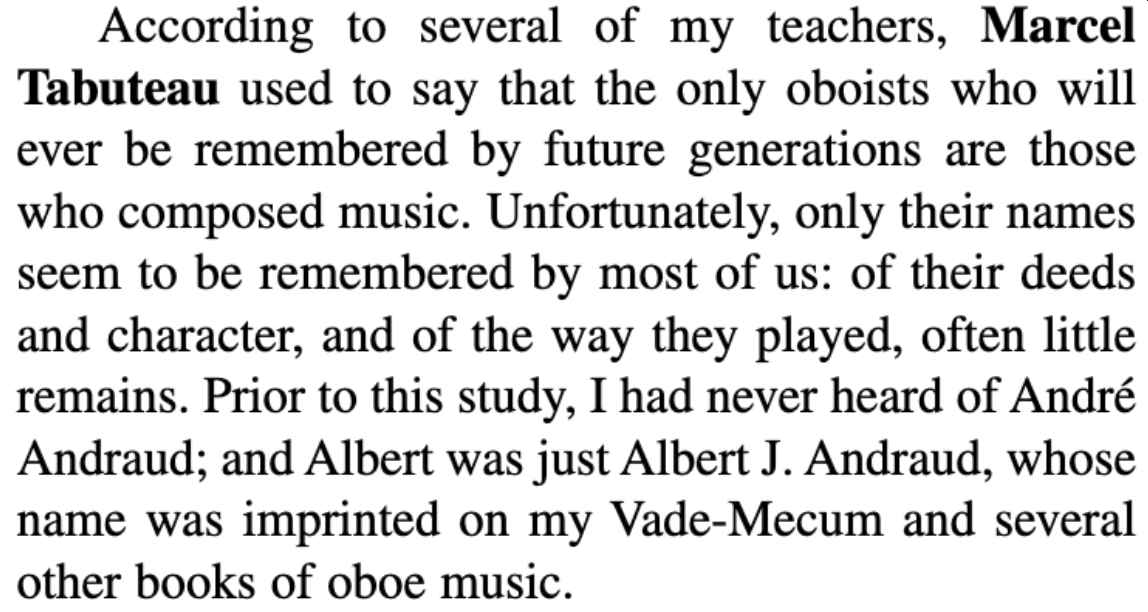
Many IDRS articles make reference to Marcel Tabuteau. The excerpted segments are presented chronologically by year.

2003

Kelly McElrath Vaneman. Sounding Beautiful: A Series of Interviews with Ronald Roseman, Part II. The Double Reed. Vol. 26, No. 1 (2003): pp. 45-54. https://www.idrs.org/publications/86-the-double-reed-2003-26-1/#page=48. Tabuteau referenced on pp. 46, 48.

Dan Purgason. An Interview with Thomas Stacy. The Double Reed. Vol. 26, No. 1 (2003): pp. 68-76. https://www.idrs.org/publications/86-the-double-reed-2003-26-1/#page=48. Tabuteau referenced on p. 69.

Terry B. Ewell. Message from the President. The Double Reed. Vol. 26, No. 2 (2003): p. 9. https://www.idrs.org/publications/87-the-double-reed-2003-26-2/#page=11. Tabuteau referenced on p. 9.

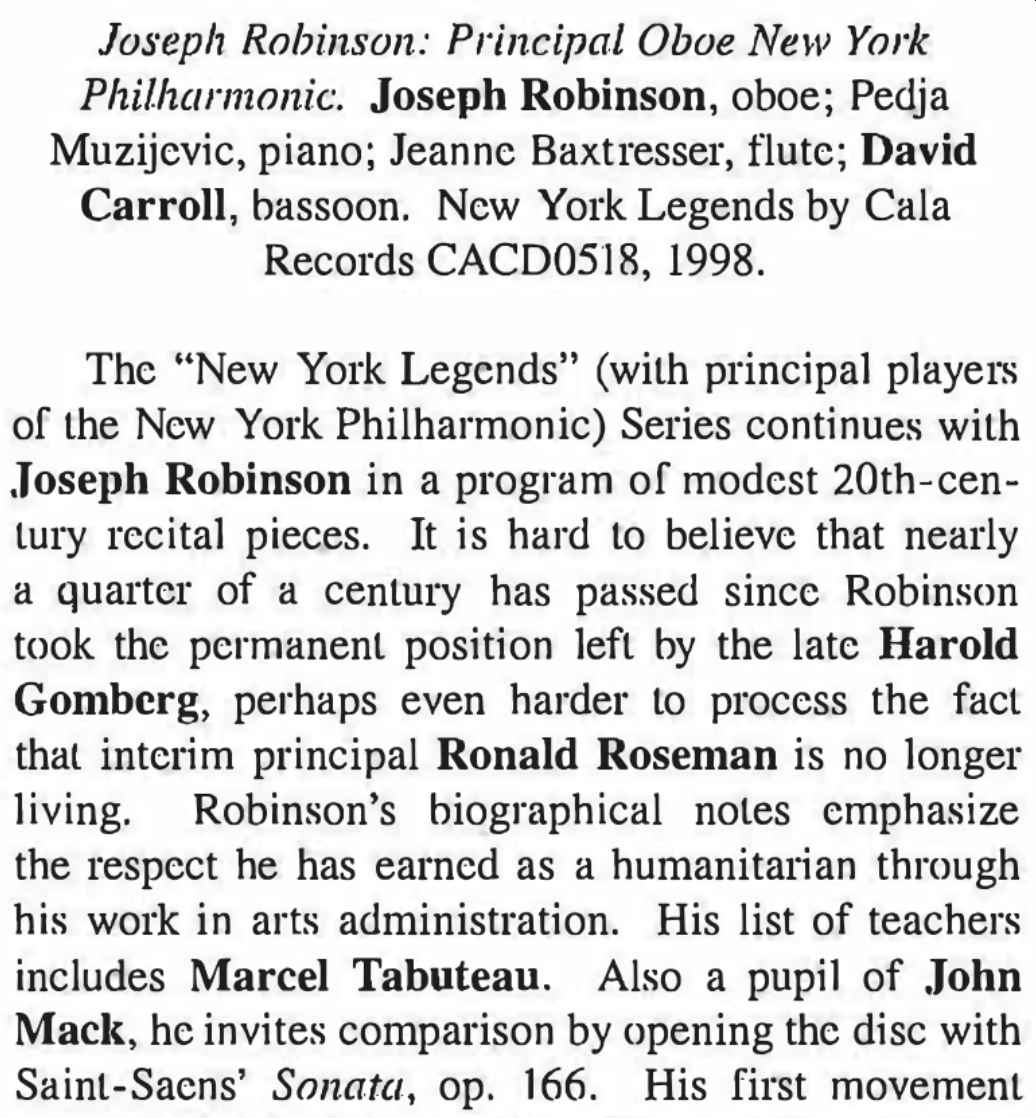
Jeanne Belfy. Oboe Recording Reviews. The Double Reed. Vol. 26, No. 2 (2003): pp. 112-114. https://www.idrs.org/publications/87-the-double-reed-2003-26-2/#page=114. Tabuteau referenced on p. 113.

Ronald Klimko. IDRS Elects Two New Honorary Members. The Double Reed. Vol. 26, No. 3 (2003): p. 32. https://www.idrs.org/publications/88-the-double-reed-2003-26-3/#page=34. Tabuteau referenced on p. 32.

Robert Howe. Heckelphones meet in New York. The Double Reed. Vol. 26, No. 4 (2003): pp. 29-30. https://www.idrs.org/publications/89-the-double-reed-2003-26-4/#page=22. Tabuteau referenced on p. 30.

Ronald Klimko. Bassoon CD Reviews. The Double Reed. Vol. 26, No. 4 (2003): pp. 123-129. https://www.idrs.org/publications/89-the-double-reed-2003-26-4/#page=127. Tabuteau referenced on p. 129.

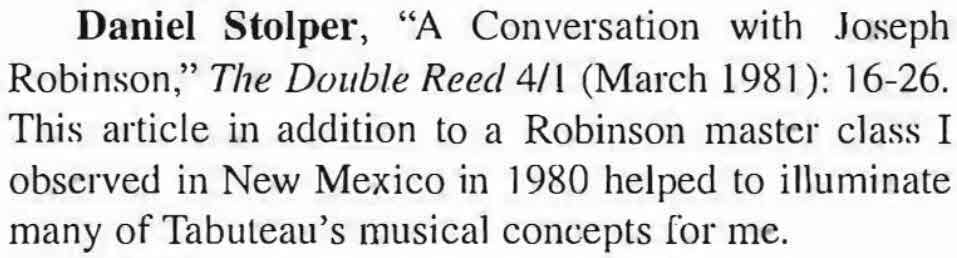
Daniel Stolper. Four Reviews. The Double Reed. Vol. 26, No. 4 (2003): pp. 142-146. https://www.idrs.org/publications/89-the-double-reed-2003-26-4/#page=22. Tabuteau referenced on pp. 142, 144.

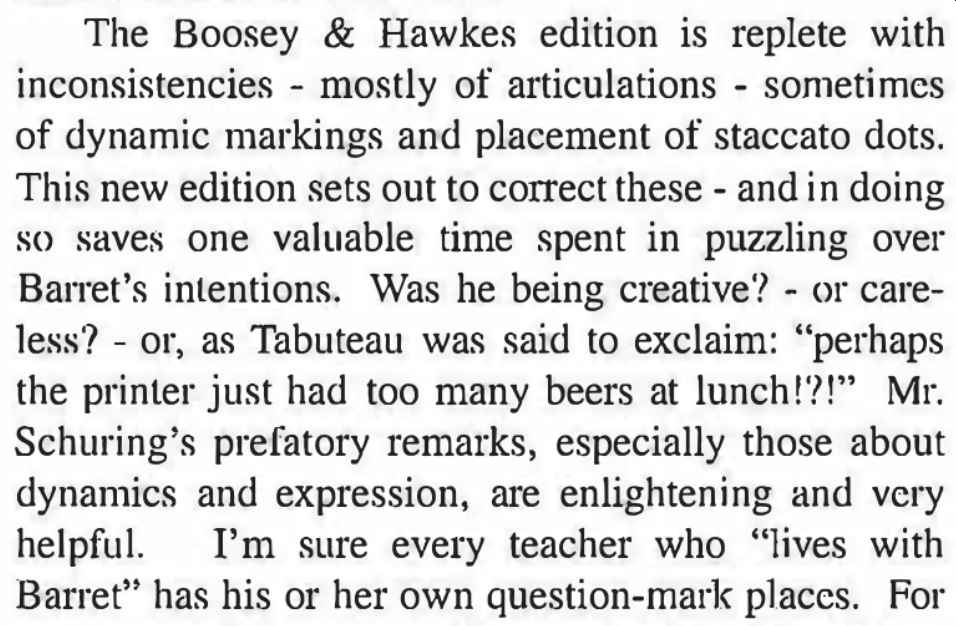
Barret Oboe Method: Edition by Martin Schuring

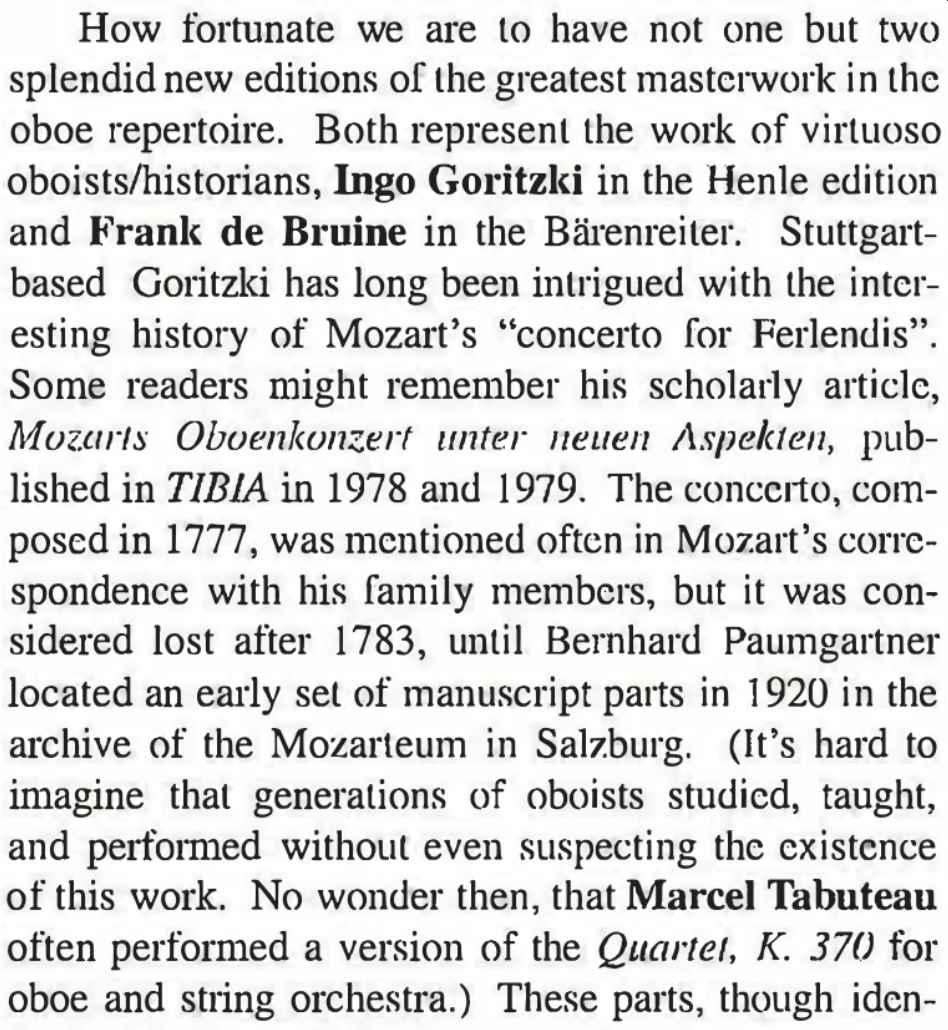
Mozart Oboe Concerto

2004

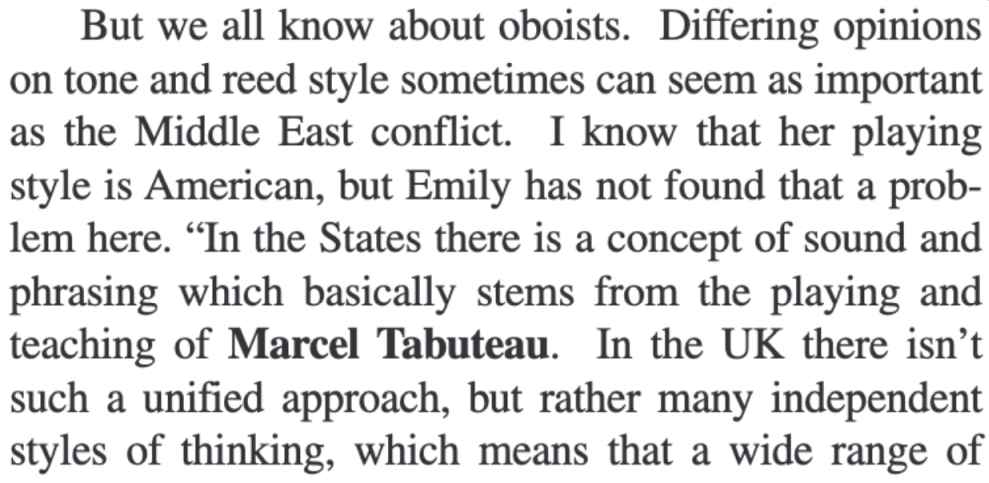
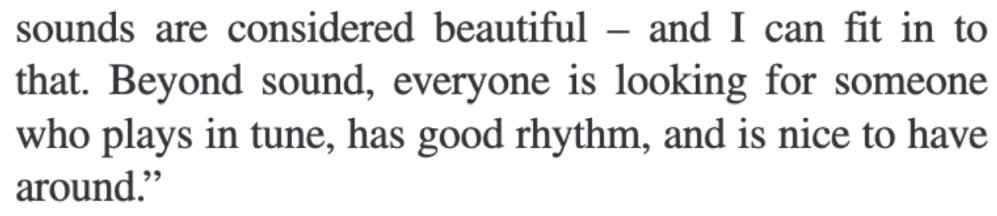
Jeremy Polmear. The Madonna Syndrome (Emily Pailthorpe). The Double Reed. Vol. 27, No. 1 (2004): pp. 59-60. https://www.idrs.org/publications/90-the-double-reed-2004-27-1/#page=62. Tabuteau referenced on p. 60.

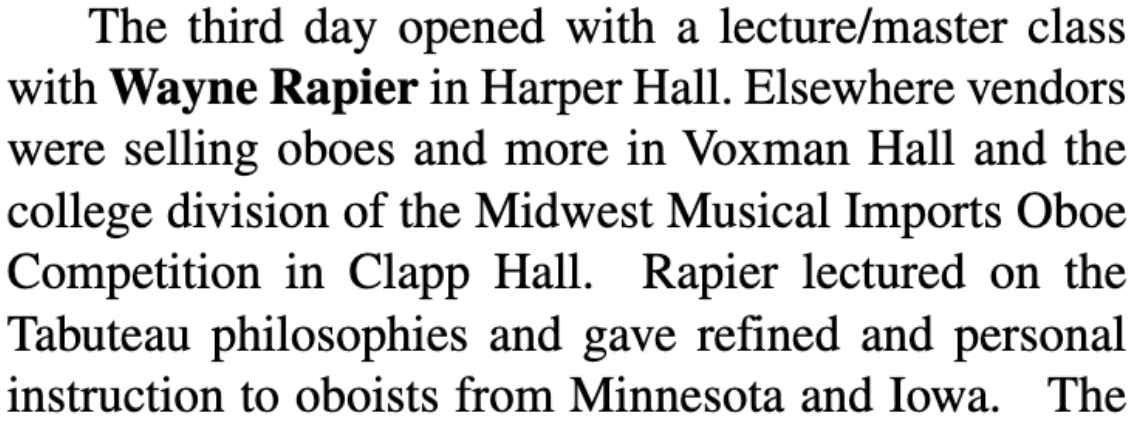
Cindy Martin. Iowa’s OctOBOEfest 2003. The Double Reed. Vol. 27, No. 2 (2004): pp. 19-21. https://www.idrs.org/publications/91-the-double-reed-2004-27-2/#page=22. Tabuteau referenced on p. 20.

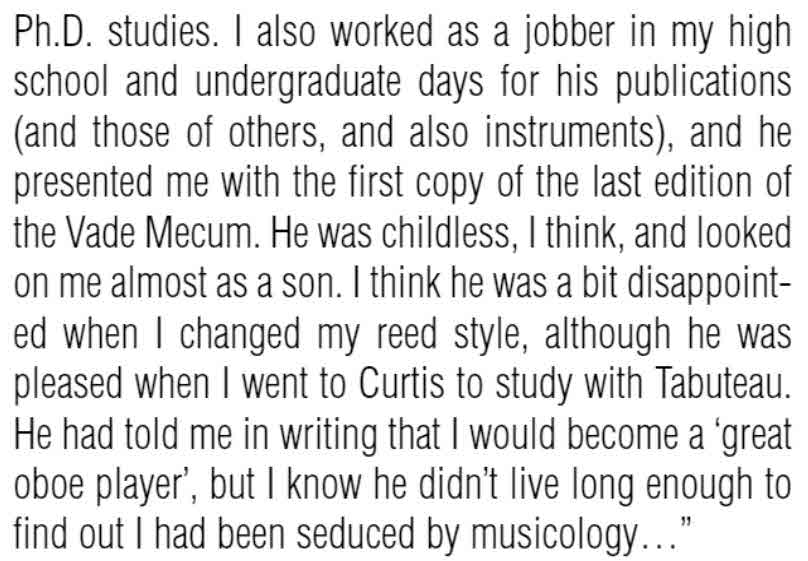
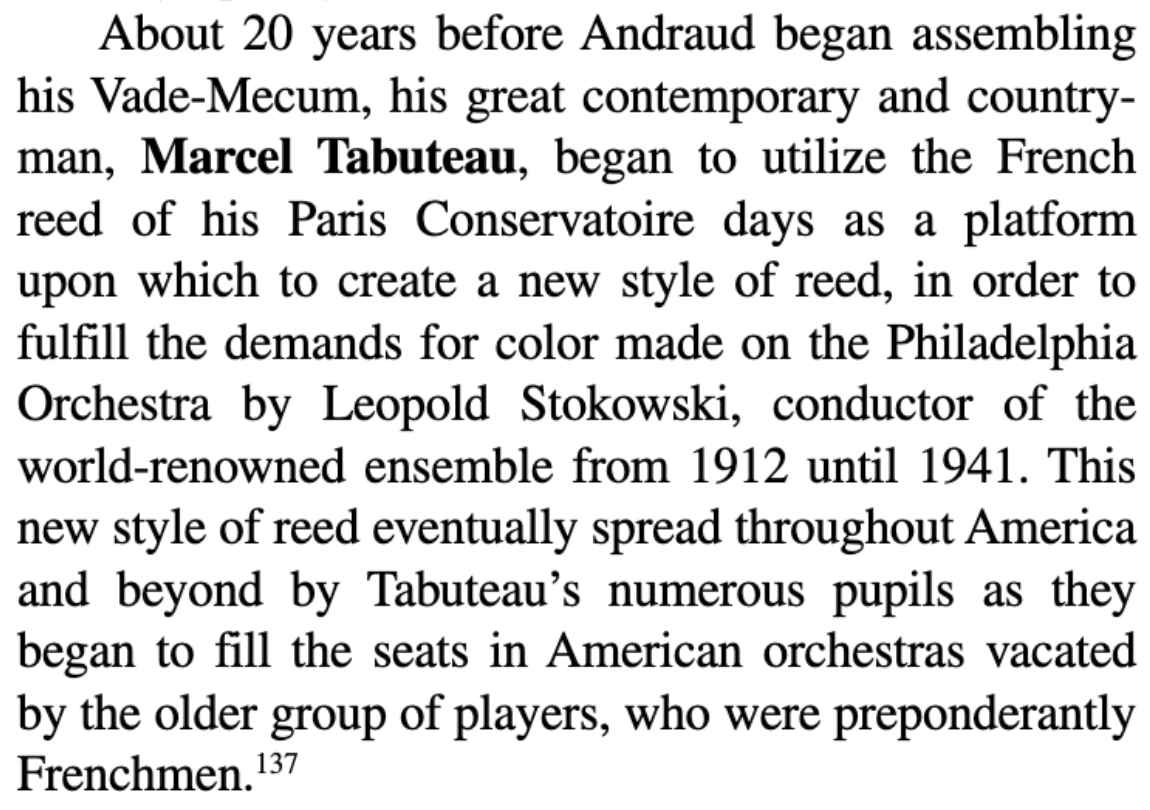
Charles Lehrer. The Vade Mecum of the Oboist. Part I. The Double Reed. Vol. 27, No. 2 (2004): pp. 47-74. https://www.idrs.org/publications/91-the-double-reed-2004-27-2/#page=22. Tabuteau referenced on p. 66.

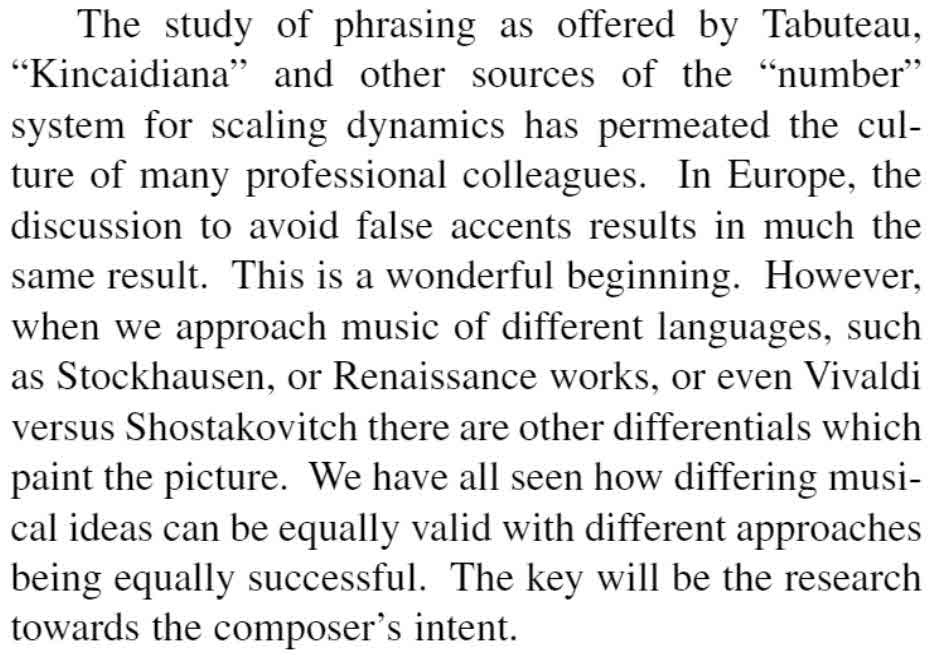
Michael Burns. Bassoon Pedagogy: A Panel Discussion at the 2003 IDRS Conference. The Double Reed. Vol. 27, No. 2 (2004): pp. 83-88. https://www.idrs.org/publications/91-the-double-reed-2004-27-2/#page=85. Tabuteau referenced on p. 87.

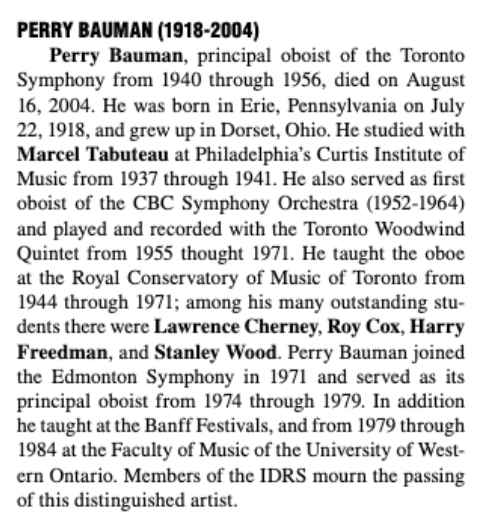
Daniel Stolper. Obituaries (Perry Bauman). The Double Reed. Vol. 27, No. 3 (2004): p. 43. https://www.idrs.org/publications/92-the-double-reed-2004-27-3/#page=44 43. Tabuteau referenced on p. 43.

Charles Lehrer. The Vade Mecum of the Oboist. Part II. The Double Reed. Vol. 27, No. 3 (2004): pp. 60-81. https://www.idrs.org/publications/92-the-double-reed-2004-27-3/#page=44. Tabuteau referenced on pp. 74, 77.

Dan Purgason. An Interview with Eugene Itzotov. The Double Reed. Vol. 27, No. 4 (2004): pp. 101-111. https://www.idrs.org/publications/93-the-double-reed-2004-27-4/#page=109. Tabuteau referenced on p. 106.

Ryoichi Narusawa. A History of Oboe Playing in Japan. The Double Reed. Vol. 27, No. 4 (2004): pp. 117-123. https://www.idrs.org/publications/93-the-double-reed-2004-27-4/#page=120. Tabuteau referenced on p. 119.

2005

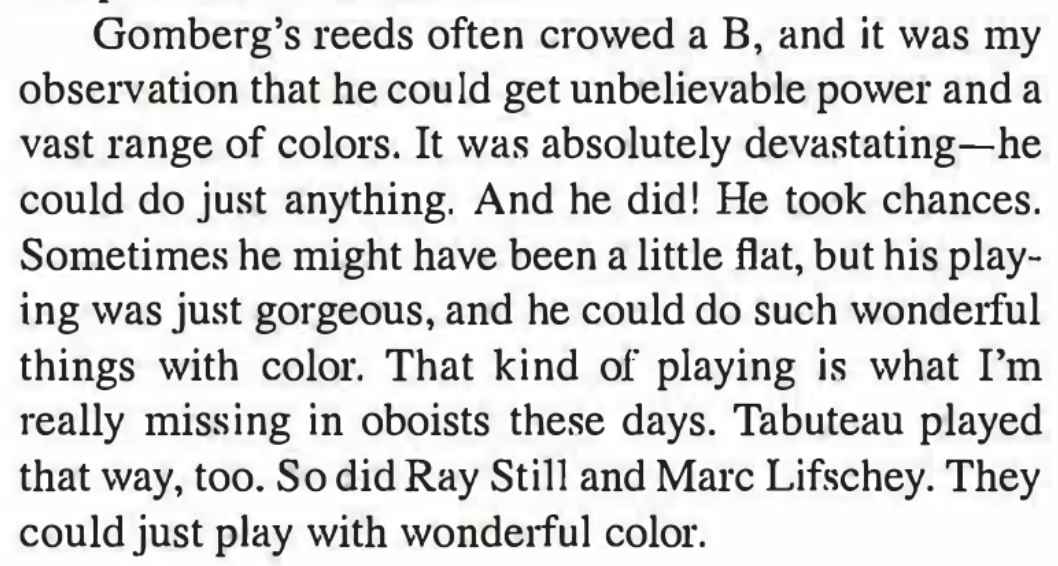
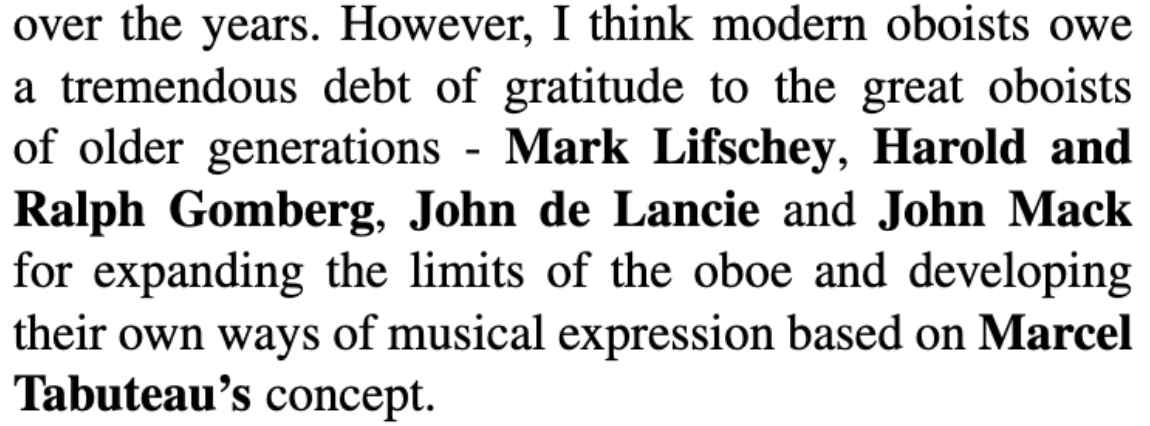
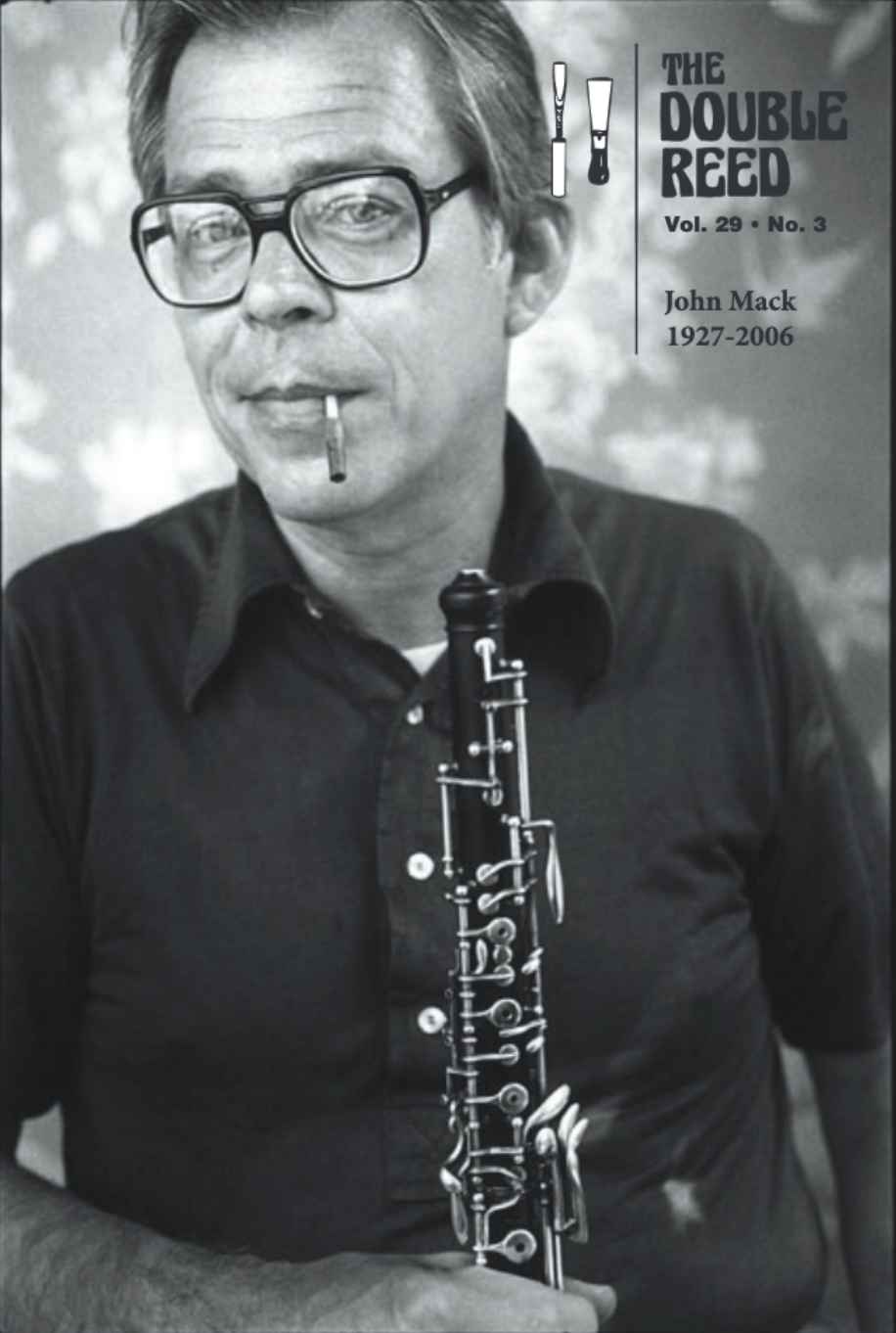
Sotos Djovanis. John Mack: Oboe Teacher. The Double Reed. Vol. 28, No. 1 (2005): pp. 98-102. https://www.idrs.org/publications/94-the-double-reed-2005-28-1/#page=100. Tabuteau referenced on p. 98.

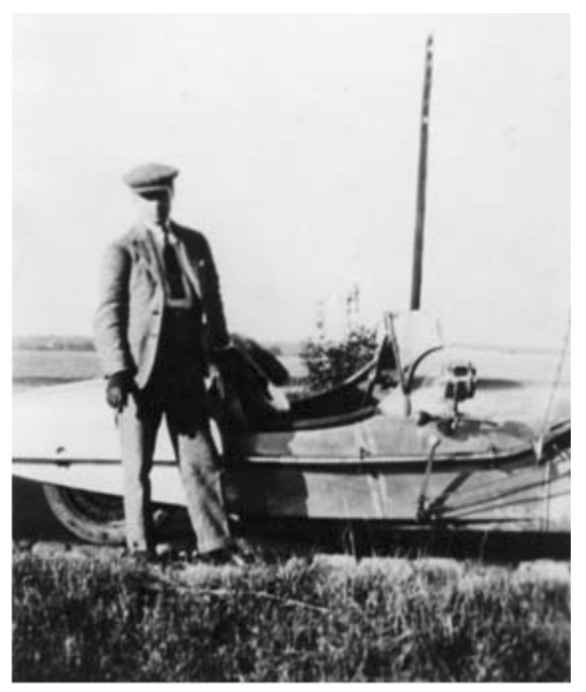
Robert Freeman. A Rare Photo of Fernand Gillet (1882-1980). The Double Reed. Vol. 28, No. 2 (2005): p. 90. https://www.idrs.org/publications/95-the-double-reed-2005-28-2/#page=92. Tabuteau referenced on p. 90.

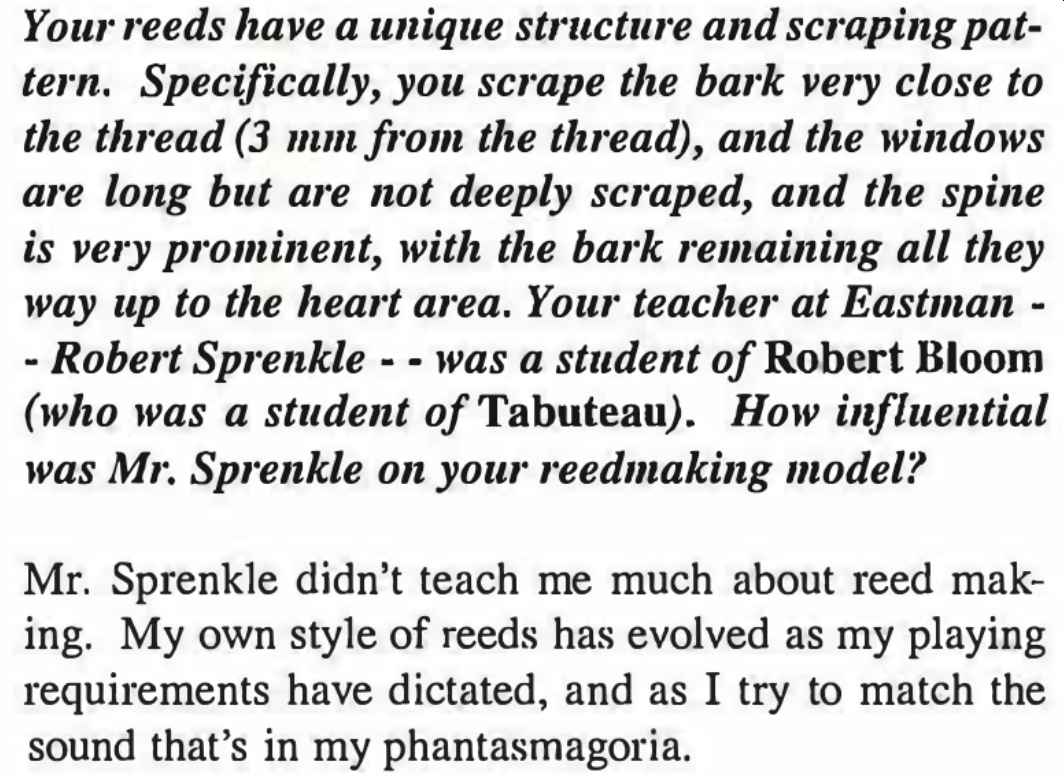
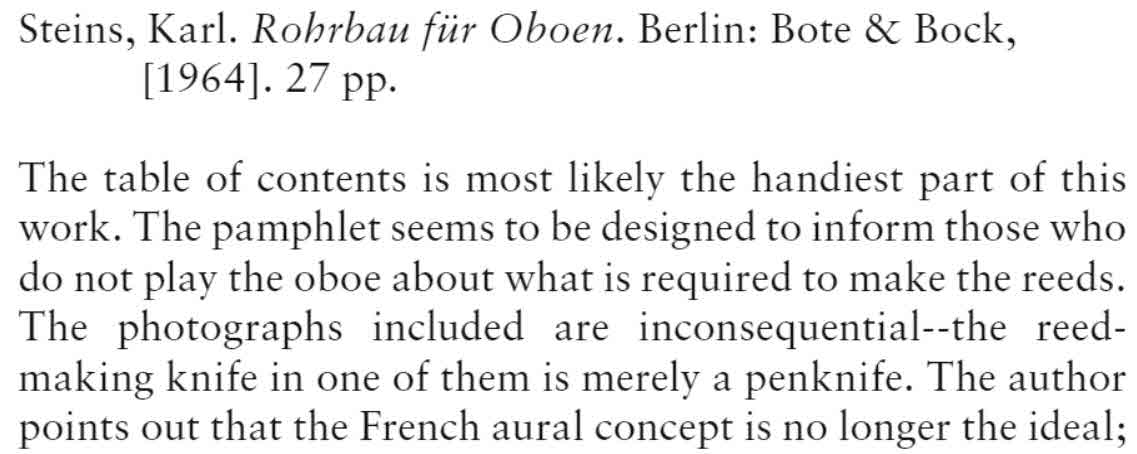
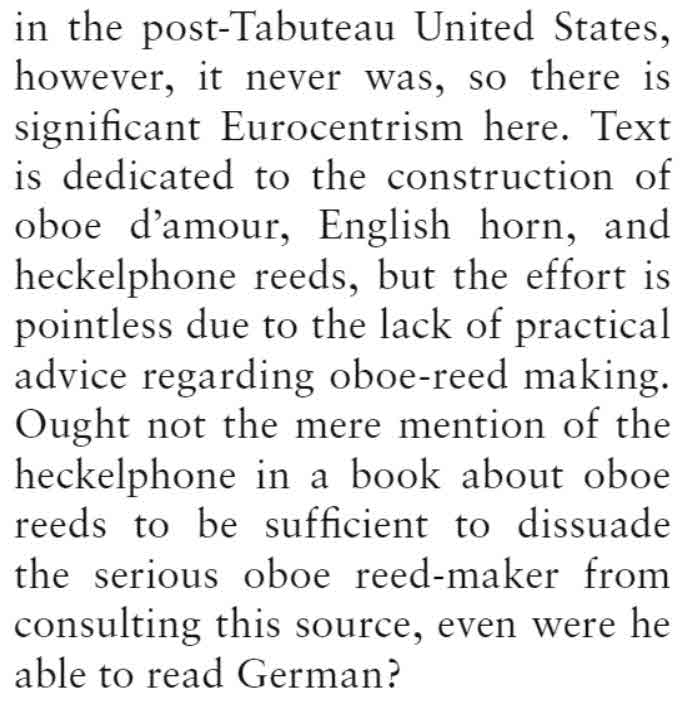
David Moore. Making Oboe Reeds: An Annotated Bibliography of Primary Sources. The Double Reed. Vol. 28, No. 2 (2005): pp. 140-144. https://www.idrs.org/publications/95-the-double-reed-2005-28-2/#page=143. Tabuteau referenced on pp. 143.

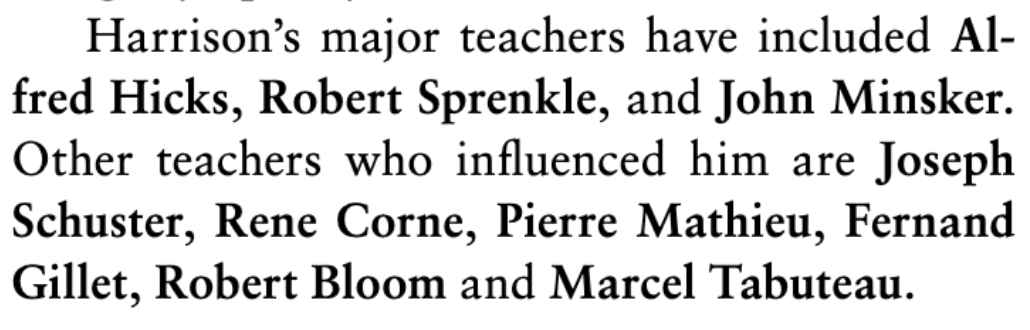
Daniel Stolper. A Tribute to E. Earnest Harrison. The Double Reed. Vol. 28, No. 3 (2005): pp. 25-30. https://www.idrs.org/publications/96-the-double-reed-2005-28-3/#page=28. Tabuteau referenced on p. 26.

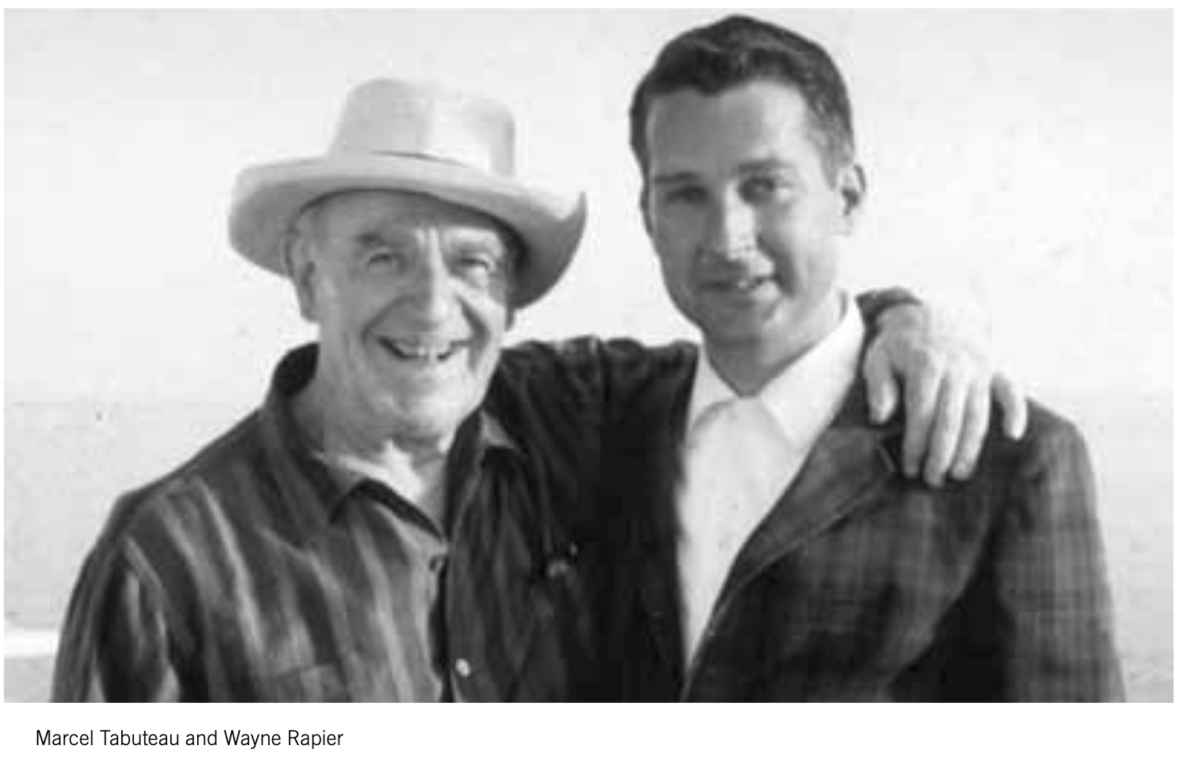
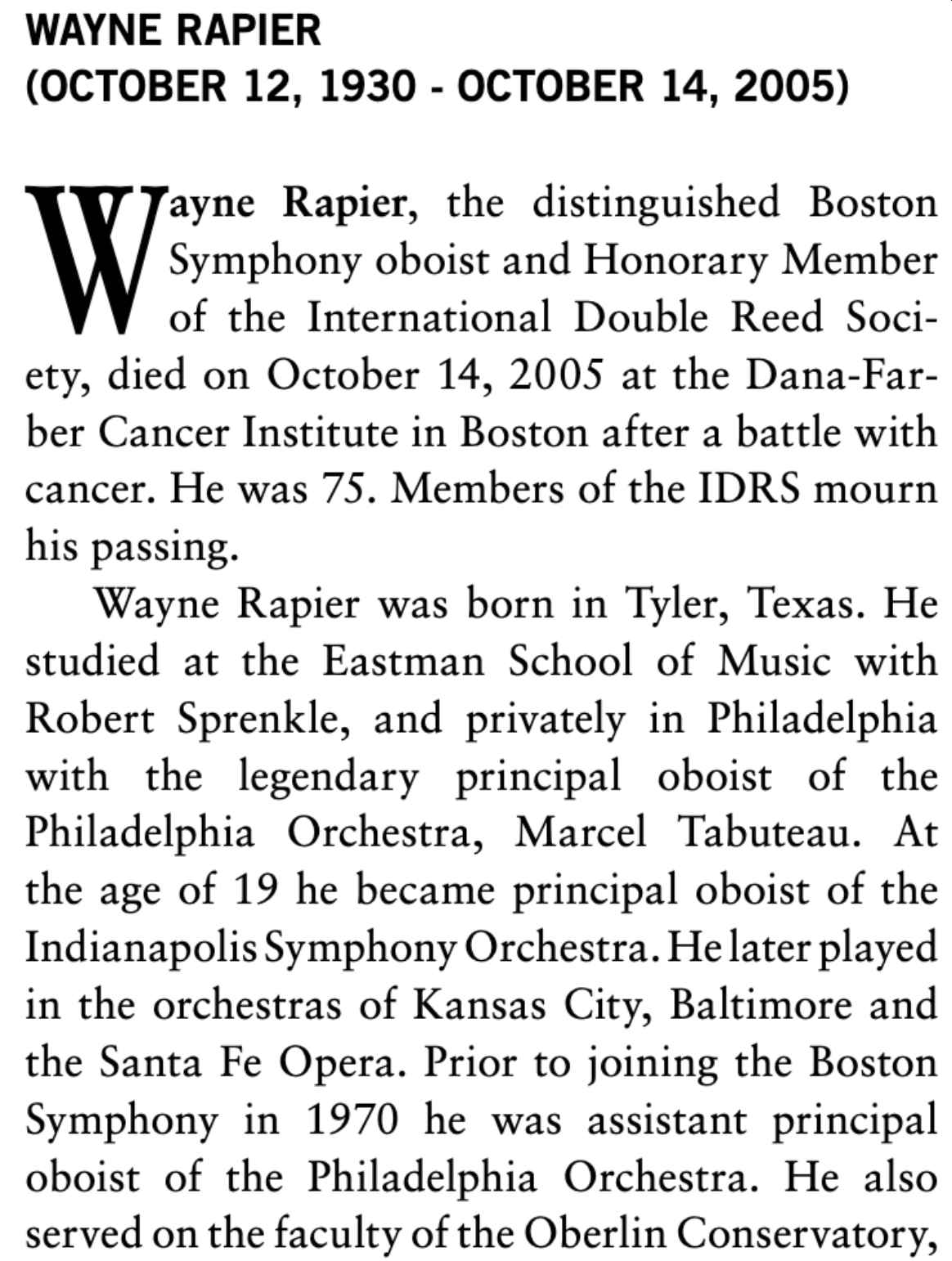
Daniel Stolper. Obituary: Wayne Rapier. The Double Reed. Vol. 28, No. 4 (2005): pp. 25-27. https://www.idrs.org/publications/97-the-double-reed-2005-28-4/#page=26 25. Tabuteau referenced on p. 25.

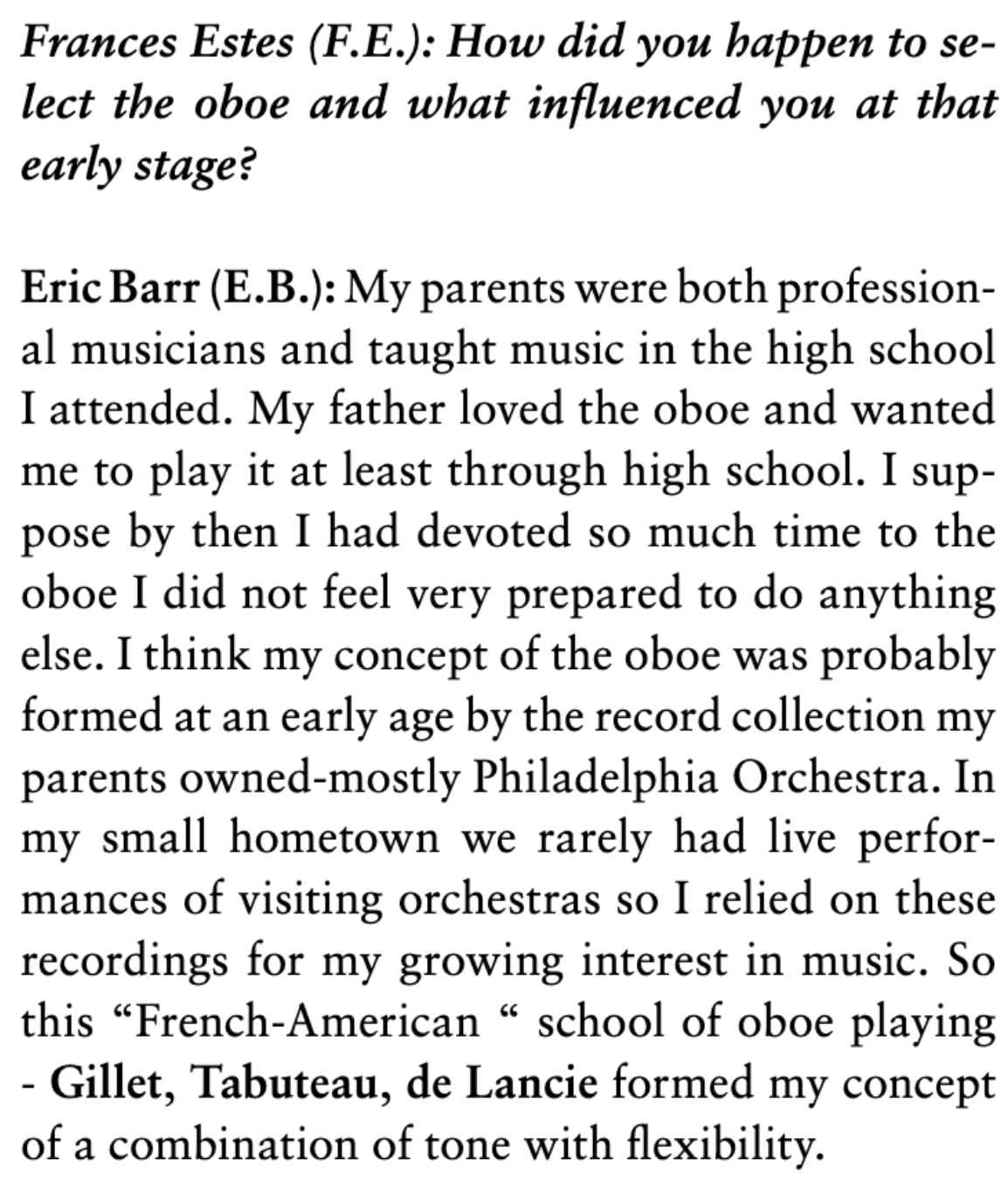
Frances Estes. Reflections and Advice for Young Oboists: A Conversation with Eric Barr. The Double Reed. Vol. 28, No. 4 (2005): pp. 47-52. https://www.idrs.org/publications/97-the-double-reed-2005-28-4/#page=49. Tabuteau referenced on pp. 47, 49, 50.

Richard Killmer. Richard Killmer: A Life Heavily Seasoned with “Variety.” The Double Reed. Vol. 28, No. 4 (2005): pp. 97-101. https://www.idrs.org/publications/97-the-double-reed-2005-28-4/#page=26 25. Tabuteau referenced on p. 99.

2006

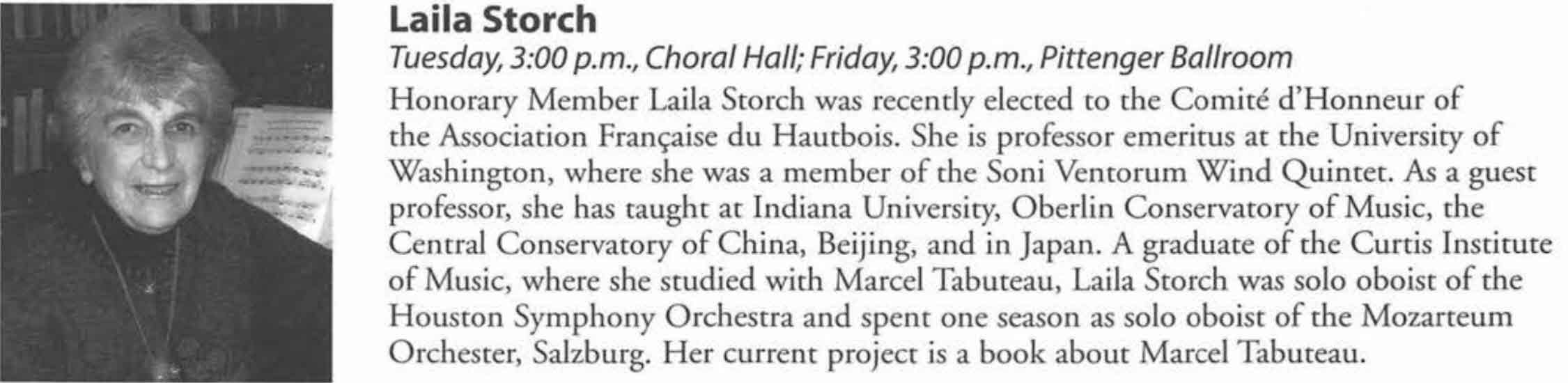
Daniel Stolper. Laila Storch. 35th Annual Conference Programs. (2006). https://www.idrs.org/publications/17-conference-programs-2006/#page=19. Tabuteau referenced on pp. 17 (daily schedule), 44, 99.

Aryn Day Sweeney. An Afternoon’s Conversation with Neil Black. The Double Reed. Vol. 29, No. 1 (2006): pp. 103-112. https://www.idrs.org/publications/99-the-double-reed-2006-29-1/#page=105. Tabuteau referenced on pp. 108, 109.

Grant Moore. Tributes to a Great Oboist and Teacher: Jim Caldwell. The Double Reed. Vol. 29, No. 2 (2006): pp. 32-38. https://www.idrs.org/publications/99-the-double-reed-2006-29-2/#page=18. Tabuteau referenced on pp. 33, 36.

Frances Colon. James Caldwell: A Reminiscence. The Double Reed. Vol. 29, No. 2 (2006): pp. 39-44. https://www.idrs.org/publications/99-the-double-reed-2006-29-2/#page=18. Tabuteau referenced on p. 39.

[Actually, Jim Caldwell studied at Curtis with John de Lancie, Tabuteau having retired and moved to Southern France in 1954.]

Daniel Stolper. Obituary: William Arrowsmith (1921-2006). The Double Reed. Vol. 29, No. 2 (2006): pp. 51-53. https://www.idrs.org/publications/99-the-double-reed-2006-29-2/#page=18. Tabuteau referenced on p. 52.

Daniel Stolper and Dana Sundet: compilers. Tributes to John Mack (1927-2006). The Double Reed. Vol. 29, No. 3 (2006): pp. 15-24. https://www.idrs.org/publications/100-the-double-reed-2006-29-3/#page=16. Tabuteau referenced on pp. 15, 16, 19, 24.

Daniel Stolper. Letters to the Editor. The Double Reed. Vol. 29, No. 3 (2006): pp. 70-71. https://www.idrs.org/publications/100-the-double-reed-2006-29-3/#page=72. Tabuteau referenced on p. 71.

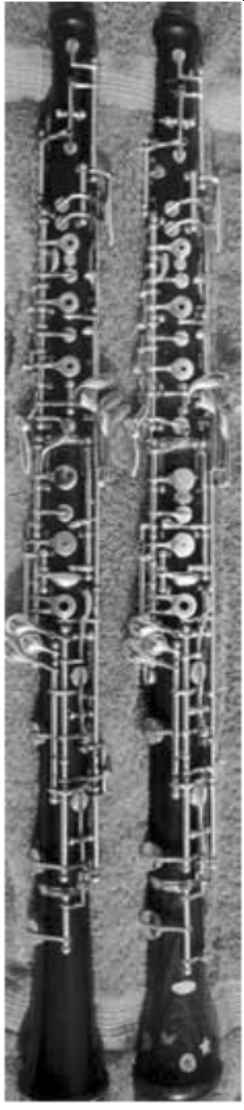
Robert Howe. Historical Oboes 15: Lorée Oboes of John Mack’s Era. The Double Reed. Vol. 29, No. 3 (2006): pp. 123-127. https://www.idrs.org/publications/100-the-double-reed-2006-29-3/#page=125. Tabuteau referenced on p. 125.

Jan Eberle. Vibrato: No Longer a Mystery! The Double Reed. Vol. 29, No. 3 (2006): pp. 128-130. https://www.idrs.org/publications/100-the-double-reed-2006-29-3/#page=131. Tabuteau referenced on p. 130.

Robert Huffman. An Oasis in Muncie, Indiana. The Double Reed. Vol. 29, No. 4 (2006): pp. 39-41. https://www.idrs.org/publications/100-the-double-reed-2006-29-3/#page=41. Tabuteau referenced on p. 40.

Sections

Much of the material on this website is being presented with kind permission of the copyright owners. Any use and/or duplication of certain materials must be approved by the copyright owners. Therefore, you must seek permission at msmostovoy@comcast.net before using or duplicating any material to ascertain whether it is presently under copyright. Certain excerpts and links may be used, provided that full and clear credit is given as per the instructions you will receive from your inquiry. If this website has inadvertently posted material without the proper attribution or authorization, to remedy, please contact msmostovoy@comcast.net.
What's New!

A new image of Marcel Tabuteau with Hans Kindler from 1949.

Marc Mostovoy Replies to the Facebook Posts Attacking Marcel Tabuteau.

Marc Mostovoy Replies to the Facebook Posts
Attacking Marcel Tabuteau

When she learned of Joan Champie’s death, and read the obituaries, Katherine Needleman, principal oboe of the Baltimore Symphony Orchestra and one of two oboe professors at the Curtis Institute of Music, posted on her Facebook page and again via video a message of outrage. Needleman’s central paragraph, in which she addresses herself directly to Marcel Tabuteau, is as follows:

“I don’t care if it was 1952 or 1954. I don’t care what you did for oboe reeds, as if anyone cares that you sometimes scraped them longer with your knife than your predecessors—what an innovation! I don’t care what you did for phrasing, and I don’t care how many (mostly men) students you inspired with your abusive teaching, which lived on for generations because they were unable to self-assess and grow past it. I don’t care about your number system. If you did not admit Joan to Curtis because she was a woman, and if you “let” her sweep your floor as a reward, this is how I remember you. *** you, Marcel Tabuteau. You know what would’ve been a real innovation that would have provided us all some benefit? Being a Very Big Fancy Man who supported women in music.
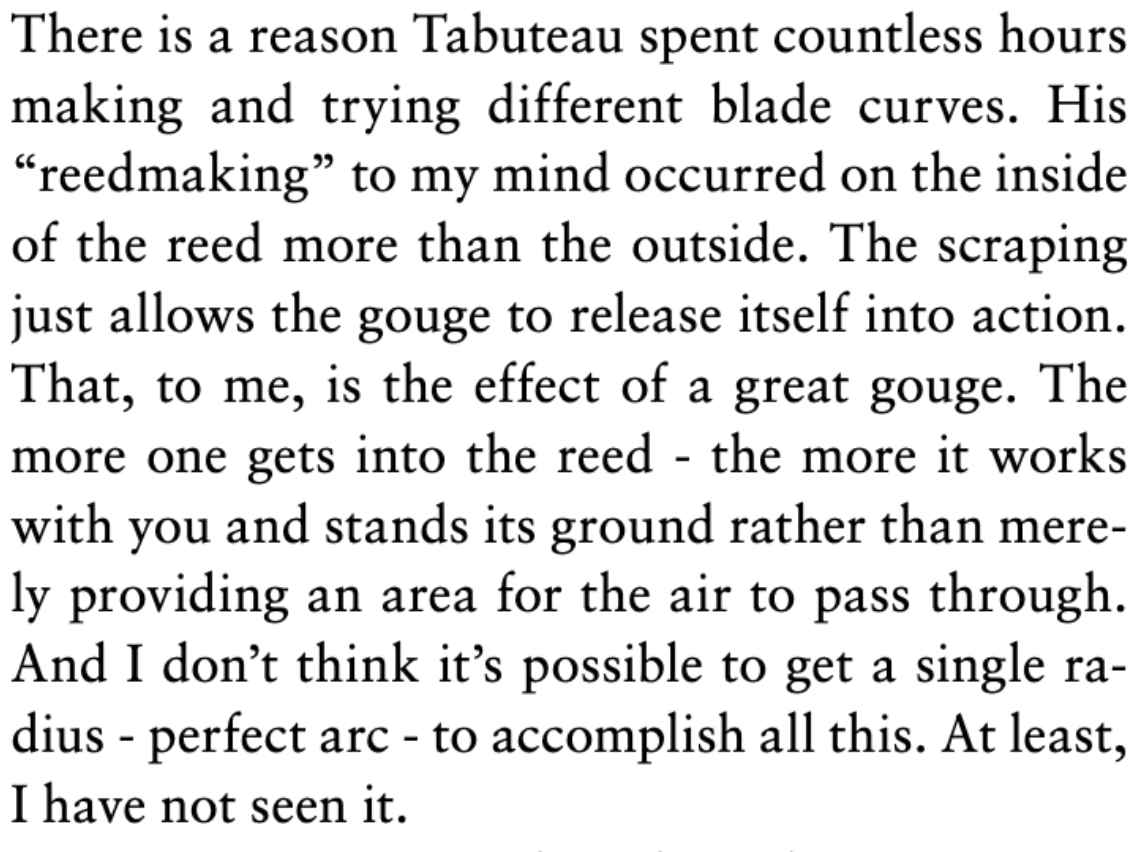
Needleman’s outrage is the result of the mention, in Joan Champie’s obituary, that Tabuteau hesitated to accept women at the Curtis Institute because 1) the likelihood of their being able to pursue a successful career was limited; and 2) because, after a successful lesson, Tabuteau “allowed her to sweep the floor.” 

Point 1 is, very obviously, one of the sad facts of orchestral life in the United States in the 1940s and 1950s, and, alas, even beyond. Conductors at that time rarely hired women oboists. The increasing presence of women in symphony orchestras in the United States, and around the world, is one of the signs of the remarkable gains made by women since the mid-twentieth century, gains akin to those that have been made in this country by other groups long dismissed or long oppressed.

Point 2, apparently troubling–although possibly the result of Tabuteau’s well-known mischievous sense of humor, needs to be understood in context. Those of us who knew Tabuteau or who knew others who knew him well, acknowledge that he could be a difficult taskmaster and act cold in lessons—not only to his rare female students, but to all of those who came to his studio. And yet most of his students remained faithful and dedicated to him because of his demonstrative artistry and the richness of his teaching. As Joan Champie herself said, after explaining to me in an interview how trying it could be to withstand Tabuteau’s sometimes severe remarks, “each lesson was a gift.” Champie was a courageous young woman whose desire to learn from an artist obviously quieted the discomfort that she felt.

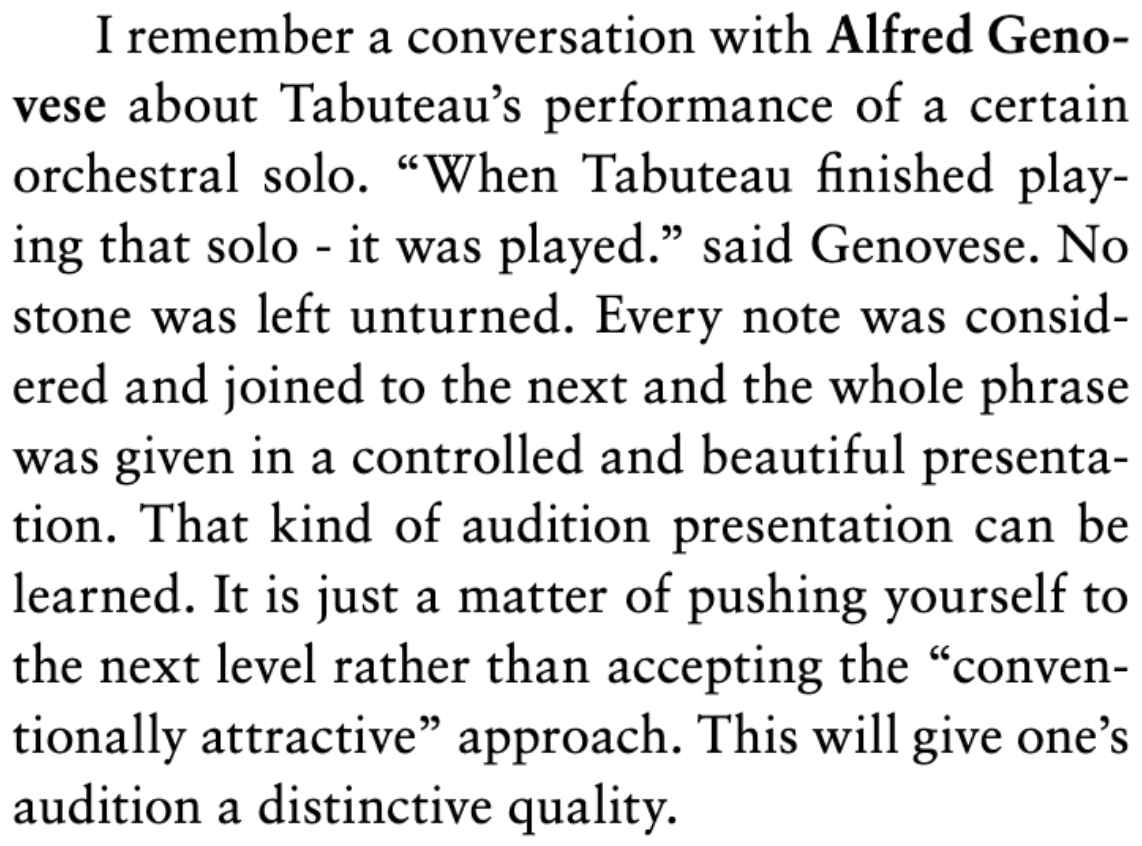
What is most distressing in Needleman’s tirade is the dismissal of Tabuteau’s reed-making, which was part of his effort to achieve a kind of sound that combined the best of the French and Viennese schools of oboe-playing (a kind of sonority that Katherine Needleman herself well produces) and the dismissal of Tabuteau’s concern with phrasing, which, as it gradually infiltrated the players who sat around him, became one of the elements that caused critics such as The New Yorker’s Winthrop Sargeant to call Eugene Ormandy’s band the “Rolls Royce” of American orchestras.

Needleman’s reference to Tabuteau’s “abusive teaching” goes too far. That teaching has lived on for generations not because Tabuteau’s students “were unable to self-assess and grow past it,” but because it incorporated logical and inspiring methods of making music come alive.

I take no pleasure in refuting Katherine Needleman’s profane tirade. Nor does anyone on our board think of the bad old days of male chauvinism as the good old days. The Marcel Tabuteau First-Hand website continues to remain dedicated to promoting the musical ideas of a man who in our view had a highly positive impact on the development of musical performance in the United States during his lifetime, and during the period since his death. I ask those reading this response and my initial reply below to forward it to others who might be aware of Needleman’s Facebook attacks, so that the facts may be known.

Marc Mostovoy
Website administrator

To Katherine Needleman: A Belated Reply to
Your August 15th, 2024, Facebook Post:
“𝐎𝐃𝐄 𝐓𝐎 𝐉𝐎𝐀𝐍 𝐂𝐇𝐀𝐌𝐏𝐈𝐄.”

Katherine—your post on Joan Champie was just recently brought to my attention: https://www.facebook.com/profile/100058038401756/search/?q=joan%20champie. Having interviewed Joan last year, I thought it would be appropriate to respond. Kindly post this letter on your Facebook page and website. Thank you.

First I want to say that I wish you did have the opportunity to get to know Joan. She was a wonderful person and so inspiring. I felt privileged to have interacted with her even though it was only for a short period of time near the end of her life. Having gained insight into her relationship with Marcel Tabuteau through our conversations (including the live interview), I wanted to pass on to you what I learned from her.

As Joan pointed out to me, it’s important to understand that things were very different in her time. Viewed through the lens of today, Tabuteau’s treatment of her seems unjust. But she was a trooper and willing to accept the indignities because of the invaluable things he taught her. She felt it was well worth it as did all the other students who studied with him.

The reason Tabuteau did not like taking women students was because conductors of the major orchestras at that time wouldn’t think of hiring a woman oboist—even a Tabuteau student. Tabuteau felt putting all his time and effort into training a woman was futile because there was no career path for them, and he tried to dissuade women from taking up the instrument for their own sakes. But there were some women who wouldn’t take no for an answer, and he reluctantly taught them. They included Joan, Laila Storch, Thelma Neft, Marguerite Smith, Martha Scherer, and Marjorie Jackson. And may I point out that everyone cherished the time they spent with Tabuteau despite the rough time he gave them. He also dished out the same tough treatment to their male counterparts as you know.

Now you might ask why Tabuteau treated all his students as he did. It certainly would not be acceptable today. But that’s the way it was then. Gillet (his teacher) and many teachers of that generation practiced that method. Tabuteau continued it because that is what he knew and grew up with. The students who couldn’t take it dropped out, but those who persevered were grateful for what Tabuteau taught them. As a footnote, many of Tabuteau’s students said it was great training to go through because it prepared them for playing under the difficult conductors they encountered afterward such as Toscanini, Stokowski, Reiner, and Szell—all dictators in their own right. 

Laila Storch’s biography contains numerous tributes by his students: woodwind, string and brass players; pianists, vocalists – all attesting how important he was to their musical lives. Tabuteau gave them something special that their own teachers couldn’t. Those who learned from him can’t all be wrong in their praise. He was a giant to them.

Throughout your post, you chastise Tabuteau for his behavior, measuring it by today’s values. I ask you to please take a step back and try to see things as they were then. Also try to appreciate what Tabuteau did to advance oboe playing and for the musicianship he instilled in so many. Today (July 2nd) being his birthday, let’s grant him the credit he deserves. 

Finally, most oboists of the Tabuteau school wouldn’t agree with you in dismissing his importance in regard to reeds, phrasing, and so forth. Indeed, Tabuteau paved the way for you too, Katherine, whether or not you wish to acknowledge it. Surely, he was far from perfect, but does he really deserve the full treatment you give him? I think not. 

Marc Mostovoy

Click here to learn more. 

Please provide your name and email address, and I will send you the whole story.