
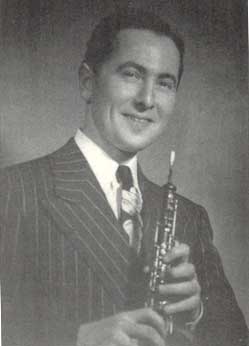
Robert Zupnik

January 2020

Hello Marc:

My father, Bob Zupnik, who was a member of the Cleveland Orchestra oboe section from 1946-1977, was a private student of Marcel Tabuteau when he was in the service during World War II. Over the years he would tell me stories from his career (he always had an entertaining orchestra story to tell!) and from his time studying the oboe, including the time he studied with Tabuteau. Here are some of his recollections:

My father was a native of Cleveland. He started out as a violinist when he was nine years old. When he was in the seventh grade, his orchestra conductor, Ralph Rush, who was well known in music education circles, announced that he had an oboe sitting on the shelf and would anyone like to learn how to play it. My father said he liked Mr. Rush, and so he raised his hand. No one else did. He said “I’ll ask at home” and came back the next day and said it was OK. No one in the family of course, including my father, had any idea of what is involved in playing the oboe. He took the instrument and was about to leave when Mr. Rush said: “Wait! You can’t play it yet. You have to have a reed!”

His first teacher in Cleveland was a high school student, Isadore Goldblum, who went on to study at Curtis with Tabuteau. For several years my father played both the violin and the oboe, and eventually gave up the violin. During his senior year in high school (Shaker Heights High School in Cleveland) in April, 1935, he auditioned at Curtis for Tabuteau. He said there were a number of people in the common room that day, including Harold Gomberg, who was just graduating and was about to go to the St. Louis Symphony. He asked my father to play something. He did, and Gomberg said: “You’ll get in.” Also there was his younger brother Ralph Gomberg, who hadn’t started at Curtis yet, and Harry Shulman. Also, flutist Julius Baker, who my father knew from growing up in Cleveland.

At his audition, he played a movement from the Concert Piece by Julius Rietz and the Ferling Etude #4. And Tabuteau had him sight read the second movement of the Handel g minor sonata.

My father was accepted by Tabuteau. However, my grandfather, who was a dentist and loved medicine, wanted very much for his son to be a doctor. My father told me he just couldn’t go against his father. And so he turned down Curtis to stay in Cleveland and study medicine. Otherwise he would have been a full time student of Tabuteau at Curtis.

He kept up his oboe playing while he was studying medicine, and would sometimes play extra with the Cleveland Orchestra. They only had three in the wind sections at the time. He had studied with oboists in the orchestra, including Philip Kirchner, Tabuteau’s first U.S. student. From 1939-1941 he played principal oboe during the orchestra’s summer season, filling in for Mr. Kirchner, who would leave town for the summer, and he played with the orchestra during the winter season when a fourth player was needed in the section. After five years of studying medicine, he received a doctor’s degree in a branch of physical therapy, mechanotherapy, which uses various techniques to help injuries heal. Some of the techniques he was taught were forerunners of the sports medicine of today.

In October, 1941, he was drafted into the army. His number came up early. He was first stationed in medical units in the South, and then received a transfer to a medical unit at Carlisle Barracks near Harrisburg, PA., where he also played in the band. While he was there he would sometimes take the two-hour train ride from Harrisburg to Philadelphia to hear a concert of the Philadelphia Orchestra, and after one concert he spoke with Mr. Tabuteau and asked if he could have some lessons with him. Tabuteau agreed, and my father traveled to Philadelphia on alternate weeks for several months in 1943 for lessons at his studio. He had about ten lessons. He played Ferling at the lessons.

As Tabuteau’s last student on a Saturday, he would walk with him to his apartment at the Drake, on his way back to the train station. Once when they were walking along he mentioned that he had studied a branch of medicine, and Tabuteau declared that if he practiced medicine and played the oboe on the side: “You will be king of the oboes!”

At one lesson, another oboist in uniform appeared at Tabuteau’s studio. Mr. Tabuteau said: “Is it all right if he listens?” That was John de Lancie.

After his release from the army in late 1945, my father played for George Szell at an informal hearing when he was a guest conductor in Cleveland; when Szell was named as music director shortly afterward, he offered my father the newly created position of assistant principal oboe. He stayed through all of George Szell’s 24 years with the orchestra and beyond, until his retirement in 1977. From time to time he would play principal oboe, including during the orchestra’s 10 ½ week tour to Europe and the former Soviet Union in the spring of 1965, and on the orchestra’s recording of the Bartok Concerto for Orchestra, after Marc Lifschey had left the orchestra in January, 1965. With the exception of one summer in the early 1950’s when the Cleveland Orchestra didn’t have a summer season, he never had a position using his medical training.

My Dad passed away in March, 2019 at the age of 101 from complications after falling and breaking his hip. His mind was very sharp to the end, and he was still telling his stories about music, musicians and about his time with the Cleveland Orchestra.

Here’s one of them: Bert Gassman, who studied with Tabuteau in the 1940’s, played with the Cleveland Orchestra in the 1930’s and again in the late 1940’s. When he left Cleveland in 1949 he told George Szell he was going into the family business, the shoe business, but he actually went to play in the Los Angeles Philharmonic. Szell called Tabuteau asking for a recommendation for another oboist, and said that Gassman is going into the shoe business. Tabuteau replied: “Ah, a promotion!”

With best regards and thanks for this wonderful website,

Marilyn Zupnik

About Marilyn Zupnik
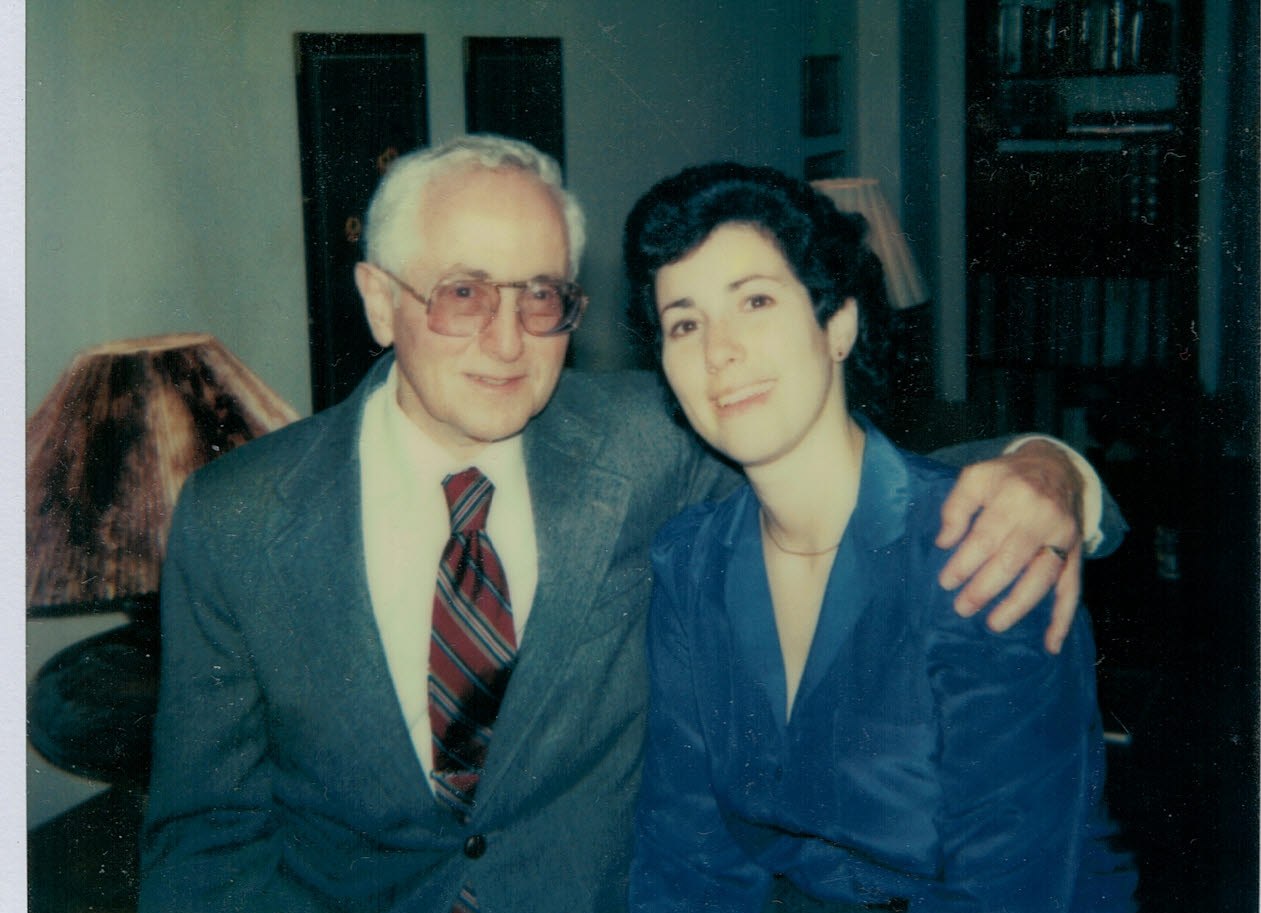
Robert and Marilyn Zupnik

“I began the study of the oboe with my father, Robert Zupnik, at the age of ten. Growing up listening to him practice the excerpts for the Cleveland Orchestra concerts, I thought everyone played the oboe! Looking back, it was a wonderful learning experience. Following a year studying with John Mack in high school, and one year at Carnegie-Mellon University with Elden Gatwood, I spent four years at Curtis, where I was a student of John de Lancie.

It was a great experience going to school there and listening to my teacher in the Philadelphia Orchestra, and I feel fortunate to be a part of the Tabuteau tradition. I think that between growing up in Cleveland and going to school in Philadelphia, I had the best of both worlds.” —M.Z.

Marilyn Zupnik was a member of the Israel Philharmonic, Orchestra London in Canada, and from 1980-2004, the Minnesota Orchestra. She has composed several pieces for oboe, including Divertimento for Oboe and String Trio, Impressions for Oboe Solo, and Duo for Oboe and Cello. She is featured in a recording along with fellow de Lancie students Kathryn Greenbank and Elizabeth Starr (Beethoven and Triebensee oboe trios), in a recording with harpsichordist Raymond Leppard (Handel and Telemann oboe sonatas) and in an educational CD, Classic Oboe Etudes. —The Editors.

Sections

Much of the material on this website is being presented with kind permission of the copyright owners. Any use and/or duplication of certain materials must be approved by the copyright owners. Therefore, you must seek permission at msmostovoy@comcast.net before using or duplicating any material to ascertain whether it is presently under copyright. Certain excerpts and links may be used, provided that full and clear credit is given as per the instructions you will receive from your inquiry. If this website has inadvertently posted material without the proper attribution or authorization, to remedy, please contact msmostovoy@comcast.net.

What's New!

A new image of Marcel Tabuteau with Hans Kindler from 1949.

Marc Mostovoy Replies to the Facebook Posts Attacking Marcel Tabuteau.

Marc Mostovoy Replies to the Facebook Posts
Attacking Marcel Tabuteau

When she learned of Joan Champie’s death, and read the obituaries, Katherine Needleman, principal oboe of the Baltimore Symphony Orchestra and one of two oboe professors at the Curtis Institute of Music, posted on her Facebook page and again via video a message of outrage. Needleman’s central paragraph, in which she addresses herself directly to Marcel Tabuteau, is as follows:

“I don’t care if it was 1952 or 1954. I don’t care what you did for oboe reeds, as if anyone cares that you sometimes scraped them longer with your knife than your predecessors—what an innovation! I don’t care what you did for phrasing, and I don’t care how many (mostly men) students you inspired with your abusive teaching, which lived on for generations because they were unable to self-assess and grow past it. I don’t care about your number system. If you did not admit Joan to Curtis because she was a woman, and if you “let” her sweep your floor as a reward, this is how I remember you. *** you, Marcel Tabuteau. You know what would’ve been a real innovation that would have provided us all some benefit? Being a Very Big Fancy Man who supported women in music.

Needleman’s outrage is the result of the mention, in Joan Champie’s obituary, that Tabuteau hesitated to accept women at the Curtis Institute because 1) the likelihood of their being able to pursue a successful career was limited; and 2) because, after a successful lesson, Tabuteau “allowed her to sweep the floor.” 

Point 1 is, very obviously, one of the sad facts of orchestral life in the United States in the 1940s and 1950s, and, alas, even beyond. Conductors at that time rarely hired women oboists. The increasing presence of women in symphony orchestras in the United States, and around the world, is one of the signs of the remarkable gains made by women since the mid-twentieth century, gains akin to those that have been made in this country by other groups long dismissed or long oppressed.

Point 2, apparently troubling–although possibly the result of Tabuteau’s well-known mischievous sense of humor, needs to be understood in context. Those of us who knew Tabuteau or who knew others who knew him well, acknowledge that he could be a difficult taskmaster and act cold in lessons—not only to his rare female students, but to all of those who came to his studio. And yet most of his students remained faithful and dedicated to him because of his demonstrative artistry and the richness of his teaching. As Joan Champie herself said, after explaining to me in an interview how trying it could be to withstand Tabuteau’s sometimes severe remarks, “each lesson was a gift.” Champie was a courageous young woman whose desire to learn from an artist obviously quieted the discomfort that she felt.

What is most distressing in Needleman’s tirade is the dismissal of Tabuteau’s reed-making, which was part of his effort to achieve a kind of sound that combined the best of the French and Viennese schools of oboe-playing (a kind of sonority that Katherine Needleman herself well produces) and the dismissal of Tabuteau’s concern with phrasing, which, as it gradually infiltrated the players who sat around him, became one of the elements that caused critics such as The New Yorker’s Winthrop Sargeant to call Eugene Ormandy’s band the “Rolls Royce” of American orchestras.

Needleman’s reference to Tabuteau’s “abusive teaching” goes too far. That teaching has lived on for generations not because Tabuteau’s students “were unable to self-assess and grow past it,” but because it incorporated logical and inspiring methods of making music come alive.

I take no pleasure in refuting Katherine Needleman’s profane tirade. Nor does anyone on our board think of the bad old days of male chauvinism as the good old days. The Marcel Tabuteau First-Hand website continues to remain dedicated to promoting the musical ideas of a man who in our view had a highly positive impact on the development of musical performance in the United States during his lifetime, and during the period since his death. I ask those reading this response and my initial reply below to forward it to others who might be aware of Needleman’s Facebook attacks, so that the facts may be known.

Marc Mostovoy
Website administrator

To Katherine Needleman: A Belated Reply to
Your August 15th, 2024, Facebook Post:
“𝐎𝐃𝐄 𝐓𝐎 𝐉𝐎𝐀𝐍 𝐂𝐇𝐀𝐌𝐏𝐈𝐄.”

Katherine—your post on Joan Champie was just recently brought to my attention: https://www.facebook.com/profile/100058038401756/search/?q=joan%20champie. Having interviewed Joan last year, I thought it would be appropriate to respond. Kindly post this letter on your Facebook page and website. Thank you.

First I want to say that I wish you did have the opportunity to get to know Joan. She was a wonderful person and so inspiring. I felt privileged to have interacted with her even though it was only for a short period of time near the end of her life. Having gained insight into her relationship with Marcel Tabuteau through our conversations (including the live interview), I wanted to pass on to you what I learned from her.

As Joan pointed out to me, it’s important to understand that things were very different in her time. Viewed through the lens of today, Tabuteau’s treatment of her seems unjust. But she was a trooper and willing to accept the indignities because of the invaluable things he taught her. She felt it was well worth it as did all the other students who studied with him.

The reason Tabuteau did not like taking women students was because conductors of the major orchestras at that time wouldn’t think of hiring a woman oboist—even a Tabuteau student. Tabuteau felt putting all his time and effort into training a woman was futile because there was no career path for them, and he tried to dissuade women from taking up the instrument for their own sakes. But there were some women who wouldn’t take no for an answer, and he reluctantly taught them. They included Joan, Laila Storch, Thelma Neft, Marguerite Smith, Martha Scherer, and Marjorie Jackson. And may I point out that everyone cherished the time they spent with Tabuteau despite the rough time he gave them. He also dished out the same tough treatment to their male counterparts as you know.

Now you might ask why Tabuteau treated all his students as he did. It certainly would not be acceptable today. But that’s the way it was then. Gillet (his teacher) and many teachers of that generation practiced that method. Tabuteau continued it because that is what he knew and grew up with. The students who couldn’t take it dropped out, but those who persevered were grateful for what Tabuteau taught them. As a footnote, many of Tabuteau’s students said it was great training to go through because it prepared them for playing under the difficult conductors they encountered afterward such as Toscanini, Stokowski, Reiner, and Szell—all dictators in their own right. 

Laila Storch’s biography contains numerous tributes by his students: woodwind, string and brass players; pianists, vocalists – all attesting how important he was to their musical lives. Tabuteau gave them something special that their own teachers couldn’t. Those who learned from him can’t all be wrong in their praise. He was a giant to them.

Throughout your post, you chastise Tabuteau for his behavior, measuring it by today’s values. I ask you to please take a step back and try to see things as they were then. Also try to appreciate what Tabuteau did to advance oboe playing and for the musicianship he instilled in so many. Today (July 2nd) being his birthday, let’s grant him the credit he deserves. 

Finally, most oboists of the Tabuteau school wouldn’t agree with you in dismissing his importance in regard to reeds, phrasing, and so forth. Indeed, Tabuteau paved the way for you too, Katherine, whether or not you wish to acknowledge it. Surely, he was far from perfect, but does he really deserve the full treatment you give him? I think not. 

Marc Mostovoy

Click here to learn more. 

Please provide your name and email address, and I will send you the whole story.